Inside a Recording Studio Session
After the vocalist has been recorded, the song is not finished. We only have material. Takes. Voices. Attempts. Good moments. Weak moments. Main vocals. Extra vocals. Maybe harmonies. Maybe doubles. Maybe something recorded in another studio and brought into the project. Now the real post-production work begins.
This article is only about this stage: what happens after the vocal recording is done and before the final track starts sounding truly professional. Not about the moment of recording at the microphone. Not about the whole philosophy of mixing from zero. This is the stage where recorded vocal material is selected, organized, tuned, synchronized, balanced, and shaped into something that can actually live inside the song.
After Recording
First we recorded the vocalist. We recorded the vocal parts at the microphone. We collected the voice. That stage was accumulation of material for work.
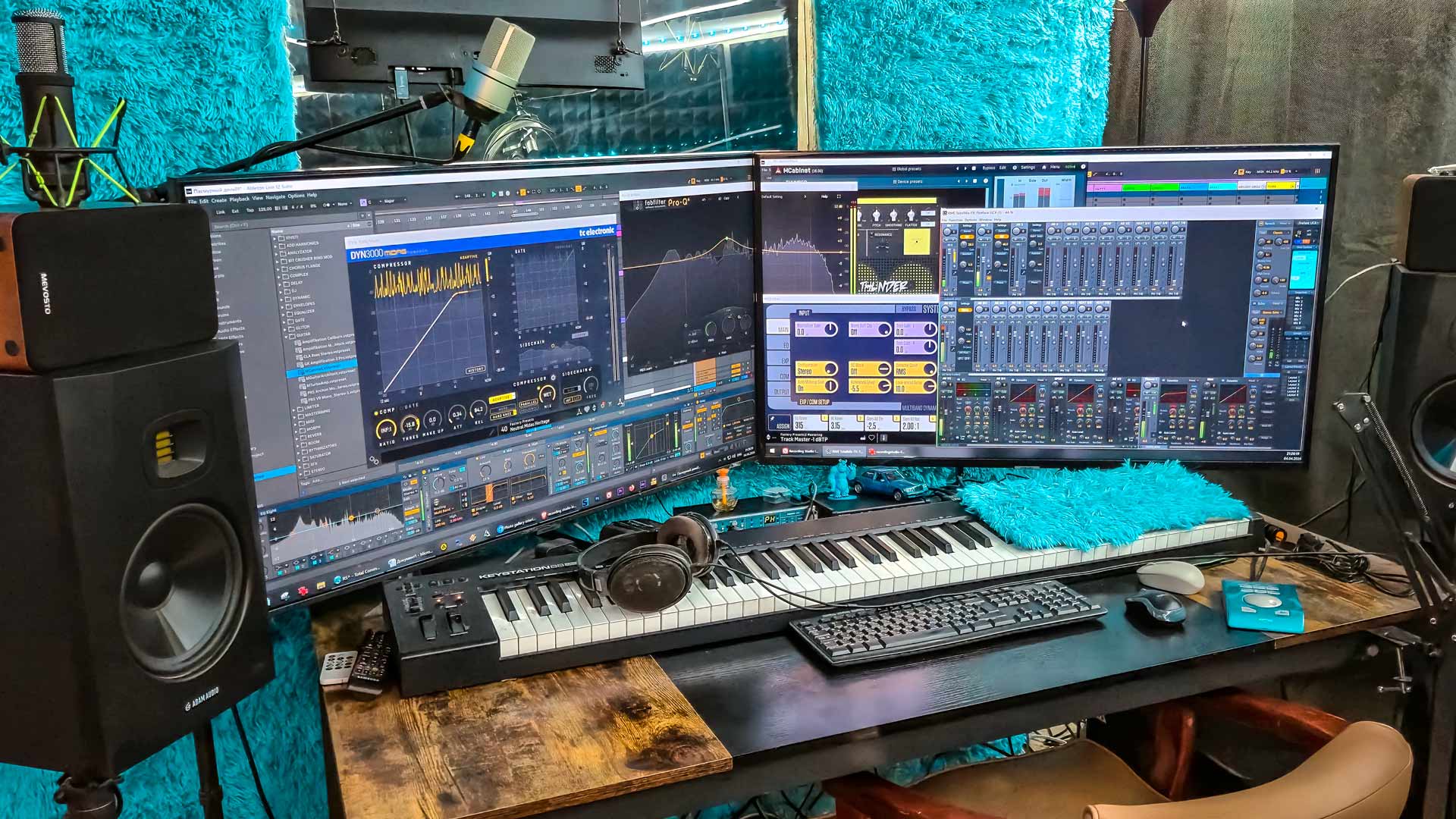
Now we open the project and we have the instrumental, and we have recorded vocal takes. Sometimes these takes were recorded here in my studio. Sometimes the artist brings a vocal take recorded somewhere else. Then we place it into the project, listen, line it up, inspect it, and understand what we are dealing with.
Of course, it is better when we do everything together in my studio. Because then I already know what we recorded. I know what we achieved. I already understand how this musician sings, where the stronger takes are, where the weaker takes are, what to expect from the material, and where something useful may be hiding.
But in any case, from this point the recording stage is over. Now begins vocal post-production: work with already recorded material.
Selecting Takes
Usually there is not one vocal take. For example, one verse may have three or four takes. Maybe more. And the first serious task is to choose the main one.
Out of four takes, we need to choose the main vocal. The one that will carry the verse. Maybe we take it almost completely. Maybe we assemble it from pieces. Maybe one line is better in one take, another phrase is better in another. But at the end of this work, we need one main vocal for the verse.
Then we do the same for the chorus. Then for the second verse. Then for the second chorus. We go through the song and decide: this is the main voice here, this is the main voice there, this is the vocal part that leads the listener.
This is not random cutting. This is the construction of the vocal spine of the song. Until the main vocal is chosen, the song is still lying on the table in pieces.
Vocal Roles
After the main vocal is chosen, we begin choosing the additional voices.
Second voices. Backing vocals. Doubles. Harmonies. Some small support phrases. Maybe something emotional in the background. Maybe something that appears only in the chorus. Every vocal piece has to receive its function.
Backing vocals also usually have several takes. And among them we also need to choose the main one. Not every recorded backing vocal deserves to be in the song. Some are useful. Some are weak. Some are good emotionally but bad technically. Some do not fit the character.
So we decide: this take will be the main voice, this one will be the backing vocal, this one will support the chorus, this one will answer the main phrase, this one is not needed. We arrange all useful takes in the project and give each of them a job.
A vocal project must not be a pile of voices. It must be organized. Every take must understand why it exists.
Notes and Tuning
After we assign the roles, we inspect the notes.
Everywhere the vocalist used tonal singing, every note has to be checked. If the note is false, we correct it. If it is completely unsuccessful, maybe we replace it with another take. Sometimes the honest answer is that this part should be re-recorded.
This is where vocal tuning begins. I already have a separate page about vocal tuning in Philadelphia, because this is a big topic by itself. But inside vocal post-production, the reason is very simple: the melodic vocal part must become correct enough to sound professional.
If there is one solo voice with no harmonies, no backing vocals, no other voices around it, that voice can sometimes allow more freedom. A wide glissando. Some expressive slide. Some slightly wild, emotional, almost atonal movement, if it makes musical sense.
But when the voice sings together with other voices, freedom becomes more dangerous. If there is a stack of vocals creating a chord, the notes must match each other. Otherwise it becomes not a harmony, but an untuned choir. And not in some beautiful ancient village way. Just badly tuned.
Modern tracks do not have much room for random false notes. False notes make the track sound cheaper. If we want the vocal to sound professional and expensive, every important note has to land.
Of course, not every vocalist can give perfect notes by performance alone. That is normal. So we use technical tools, we try, we correct, we replace, and finally we build the correct melodic shape of the vocal.
Timing
When the takes are selected and the notes are clean enough, the next problem is timing.
The main voice has to work with the rhythm of the instrumental. Of course, a solo voice can allow some rhythmic freedom. Sometimes that is even the style. A singer may push a little, delay a little, breathe around the beat. That can be expressive.
But when other voices are singing together with the main voice, the rules become stricter.
Backing vocals, doubles, second voices — they must be synchronized with the main vocal. Every consonant, every vowel, every entrance, every ending has to sit in time. Otherwise the listener does not hear a rich vocal arrangement. The listener hears a vocal mess.
If false notes between voices create an out-of-tune choir, bad timing between voices creates porridge. It becomes unclear, dirty, cheap. Words stop reading properly. The vocal stack stops sounding expensive and starts sounding like nobody bothered to finish the job.
That is why synchronization is so important. The main vocal is aligned with the instrumental where needed. The additional voices are aligned with the main vocal much more precisely. They should sound like they belong together, not like several people wandered into the same song by accident.
Vocal Sound
After the voices are selected, tuned, placed, and synchronized, the next stage is balance: volume and frequencies.
Now we take these prepared voices and start applying dynamic processing. The goal is to reduce the dynamic range, make the vocal more even, denser, more readable. Not because we want to “press buttons.” Because a vocal that jumps too much in volume will not sit in a modern track properly.
Then we work with frequencies. Something may need to be added. Something may need to be removed. Not by superstition. Not because some YouTube engineer said “always cut this frequency.” By ear. By context. By the actual voice, actual instrumental, actual song.
Then we listen to the vocal with the instrumental. Is the main vocal too loud? Too quiet? Are the backing vocals too forward? Are they hiding? Should the chorus open more? Should some phrase be stronger? Should some support voice step back?
This is where the track begins to feel like a record instead of a folder full of vocal files.
Artist Approval
At every stage, I approve the direction with the author, with the client.
The author has the right to any opinion. I can say what I think. I can explain why something seems better to me. I can say, “I hear it this way.” But the artist’s idea has priority.
Maybe I am wrong. Maybe we are all wrong and the author is right. Maybe the thing that looks strange to the engineer is exactly the thing that makes the song alive for the artist.
The author must have space. Flight of thought. Creative territory. A studio should not become a place where the engineer fights the artist for control of the song.
I can guide. I can help. I can warn. I can suggest. But I do not want the artist to feel like every attempt to participate meets resistance. That is a terrible studio atmosphere.
Effects
After the balances are built, effects may be added where needed.
Reverb. Delay. Chorus. Flanger. Spatial processing. Some special movement. Some atmosphere. Maybe nothing too dramatic. Maybe something very noticeable if the song asks for it.
Effects are not religion. They are taste, function, and context. A delay is not good because it is a delay. A reverb is not beautiful because it is expensive. An effect is useful only when it helps the vocal live better inside the track.
Sometimes the vocal needs space. Sometimes it needs intimacy. Sometimes the most expensive sound is not “more effects,” but the correct amount of them.
Listening
We do not listen once and declare victory.
We listen through the song in motion. Verse into chorus. Chorus into verse. The place where the energy should rise. The place where the vocal should step closer. The place where the backing vocals should support but not steal attention.
During this listening, we notice what should be corrected. Maybe something is too loud. Maybe something is too hidden. Maybe a moment should be emphasized. Maybe an effect should appear only on one phrase. Maybe the chorus needs more lift. Maybe the verse needs more intimacy.
Step by step, we come closer to the correct sound. Not by one magic button. By listening, correcting, listening again, approving, and moving forward.
This is how a professional track appears. Not because somebody threw plugins on the vocal. But because the material was selected, tuned, synchronized, balanced, shaped, and approved with musical attention.
Studio Work
I have seen the opposite approach too many times: the engineer does not explain anything, does not correct anything openly, just sits there turning something for himself. The author tries to participate, and suddenly the author’s own song becomes someone else’s technical territory.
I do not like that.
I support the author in their creative attempts. I want the artist to feel comfortable in the studio. I want collaboration to be productive and constructive. I want the person to understand what is happening to their song and to feel that we are working together, not standing on opposite sides of the glass like enemies.
My job is to help realize the artist’s idea and make the track sound professional. Sometimes that means technical correction. Sometimes that means taste. Sometimes that means patience. Sometimes that means saying honestly: this part is not working yet, let us fix it.
So come to the studio. We will work through the song step by step: choose the right takes, tune what needs to be tuned, synchronize the voices, build the balance, add effects where they belong, and shape the vocal sound together.
The goal is simple: not just to “process vocals,” but to make a good, professional, living track — and hopefully start long-term creative cooperation.