Inside a Recording Studio Session
Pop music looks simple only from far away. A few beautiful words, a memorable melody, a pleasant voice, a chorus people can remember — and everybody thinks that is all. But in the studio, even ordinary pop music has to be built carefully.
At Ronter Sound Recording Studio Philadelphia, when an artist comes to record a pop song, I do not treat it like “just sing something nice.” Pop music is popular music. It is supposed to reach many people. That means the song has to be clear, emotional, understandable, stylistically balanced, and not destroyed by technical mistakes.
This article is about how we record pop songs in my studio: from the idea and lyrics to the vocal performance, emotions, technical control, effects, style, and final direction of the song.
Before the Session
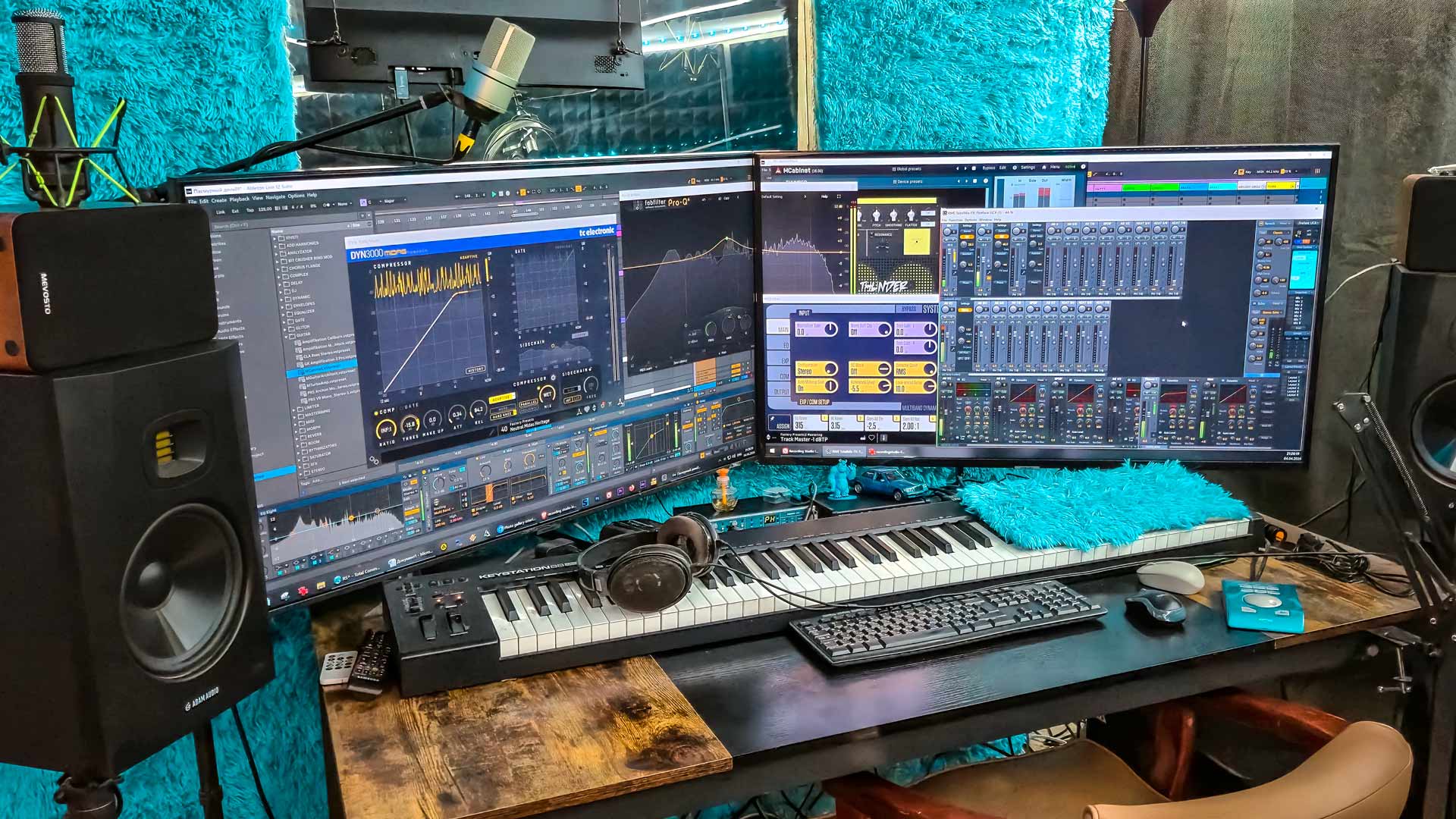
My first request to the author is simple: before you come to the studio, think about what the song is about.
Yes, this is pop music. This is not rap, where the text usually carries much more weight. In pop, sometimes the words can be very simple. Sometimes they can almost be just beautiful sounds, beautiful phrases, two memorable words, some emotional mood without a complicated meaning.
But why waste the opportunity?
If a song has words, then maybe those words can say something. Maybe not a philosophical dissertation. Maybe not Shakespeare. But something. A feeling. A situation. A clear emotion. A thought that a normal person can recognize.
Pop music does not have to be stupid just because it is popular. A pop song can be simple and still meaningful. It can be easy to understand and still have heart.
Preparation
Ideally, before coming to the studio, the author already understands the song.
Where exactly do they sing? What melody do they sing? What notes? Where does the verse begin? Where does the chorus open? Where should the emotion grow? Where should the voice be softer? Where should it become brighter?
The more prepared the song is before the session, the easier it is to record it properly.
But if the artist does not know all of this yet, that is not a disaster.
Then we can work together. We can create the arrangement together. We can find melodies. We can decide how the song should sound. We can build the structure. We can figure out what the verse should do, what the chorus should do, how the vocal should behave, and what kind of emotional shape the track needs.
That is also studio work. That is not a problem. I can help with that.
The Session
So the author of a pop track comes to my studio.
Maybe the song is already prepared. Maybe we need to shape it together. In any case, sooner or later we come to the vocal recording.
And in pop music, the voice is extremely important.
It may not be operatic. It may not be technically huge. It may not have dramatic virtuosity. But it has to be listenable. It has to be pleasant enough, emotional enough, clear enough, and correct enough for the listener not to stumble over it.
I listen for technical mistakes. I listen for rhythm. I listen for notes. I listen for places where something dissonates. I listen for false notes. I listen for diction. I listen for emotion.
Because in pop, everything is exposed in a very cruel way. If the song is supposed to be simple and accessible, then any awkwardness becomes very noticeable.
Vocal Takes
If the first take does not work, we do not pretend it is brilliant.
We record more takes.
Maybe the rhythm was not right. Maybe the note was false. Maybe the diction suffered. Maybe the phrase was technically correct but emotionally empty. Maybe the singer was too careful. Maybe the chorus did not open. Maybe the verse was too sleepy. Maybe the hook did not hook anyone.
Then we try again.
I point out what did not work technically. I help the artist understand where the problem is. I do this carefully, because the author’s vision must be carried through the process, not broken by the studio.
The goal is not to humiliate the performer. The goal is to help the performer give the song what it needs.
Emotion
In pop music, correct notes matter. Rhythm matters. Diction matters. Technical accuracy matters.
But if there is no emotion, the song may still feel empty.
A pop vocal does not always need to be complicated. But it has to make the listener feel something. Even if the feeling is simple. Joy. Nostalgia. Sadness. Flirtation. Lightness. Confidence. Tenderness. Energy.
The artist has to understand what emotional role they are playing in the song.
Are they speaking to someone? Remembering someone? Celebrating something? Regretting something? Seducing? Dancing? Asking? Letting go?
If the artist does not know what emotional state the vocal should have, the voice may become just sound. Beautiful maybe, but empty.
Author's Vision
During the recording, I give advice.
I may say that a note needs to be cleaner. I may say that a phrase needs more energy. I may say that the diction is not clear. I may say that the rhythm is not sitting well. I may suggest another delivery or another take.
But I do all of this while protecting the author’s idea.
The studio should not destroy the original intention of the song. If the artist came with an idea, we should not accidentally turn it into something completely different just because the engineer wanted to show off.
Of course, sometimes while working, we find something better. Sometimes the original idea was weak, and in the studio we discover a new direction. Sometimes the song changes radically, and that can be good.
But that has to happen with the author, not against the author.
The author must feel that the song is still theirs.
Vocal Production
After the necessary vocal material is recorded, we continue working.
We prepare the vocal. We correct what needs to be corrected. We process it. We add effects where they belong. We build the sound so the vocal fits the song.
But again, everything must stay within the style and the author’s intention.
A pop vocal can be bright. It can be intimate. It can be wide. It can be dry. It can be modern and processed. It can be more natural. It depends on the song.
There is no one universal “pop vocal preset” that solves everything. That is nonsense. The vocal sound must serve the specific song, the specific artist, the specific emotional idea.
Pop Style
The special thing about pop music is that it is aimed at a wide audience.
Not only at fans of some narrow subgenre. Not only at people who love a specific underground style. Not only at musicians who appreciate complicated harmonic tricks.
Pop wants to be understood by many people.
This does not mean it must be primitive. This does not mean it must be stupid. But it does mean the song should be accessible.
The theme should be understandable to many listeners. The melody should not be so strange that only five trained musicians can enjoy it. The style should not run too far into some extreme corner. The sound should not become so niche that the song stops being pop and becomes something else.
If the track leans too much into rock, maybe it becomes rock. If it leans too much into jazz, maybe it becomes jazz. If it becomes too aggressive, too experimental, too difficult, too strange, then maybe it is no longer pop in the practical sense.
So when we work on a pop song, we remember: this song is trying to reach as many people as possible.
Balance
A pop song needs balance.
Enough emotion, but not theatrical nonsense.
Enough musical interest, but not cleverness for the sake of cleverness.
Enough modern sound, but not so many effects that the artist disappears.
Enough individuality, but not so much eccentricity that the broad listener cannot enter the song.
This is the craft of pop music. It seems simple, but it is not. To make something understandable and still alive is very difficult.
That is why in the studio I make suggestions based on the style. I listen not only as a technician, but as someone who understands the purpose of the genre.
If the goal is pop, then the song should not accidentally become a private experiment that only the author understands.
Beginners and Young Artists
Not every artist who comes to record pop music already has experience.
Some are very young. Some are just starting. Some have a voice but do not yet understand structure. Some have lyrics but no melody. Some have an idea but do not know how to turn it into a finished song.
That is fine.
We can work with beginners. We can guide them by the hand. We can explain. We can advise. We can help find interesting solutions. We can help the track become better than it was when it first entered the studio.
Sometimes the author brings a weak idea, but through work we find something stronger. Sometimes the song changes. Sometimes the direction becomes clearer. Sometimes the artist suddenly understands what they actually wanted only after hearing a few versions.
This is normal creative work.
The Result
When everything comes together — the text, the melody, the vocal, the emotion, the arrangement, the style, the processing, the effects, the balance — the song starts to live.
The author hears it and feels: yes, this is what I wanted. Or maybe even: this is better than what I imagined.
That is the goal.
Not just to record a voice. Not just to polish a vocal. Not just to make something loud and shiny.
The goal is to make a pop song that works: clear enough, emotional enough, stylistically correct enough, and accessible enough for a wide audience.
And if the artist likes the process, they come back. We make another song. Then another. Then another. That is how an artist grows. Song by song.
Record Your Pop Song
If you want to record a pop song, come to the studio.
Bring your idea, your lyrics, your melody, your instrumental, your rough demo, or even just the direction of what you want the song to become.
We will work together. I will help you with the recording, with the vocal, with the emotion, with technical accuracy, with the style, with the sound, and with bringing the song closer to the idea you had in your head.
You do not have to be experienced. You do not have to know everything. We can figure it out together in a comfortable, professional, supportive studio atmosphere.
My job is to help your song become real — and to make it sound like something people can actually listen to, remember, and enjoy.