Inside a Recording Studio Session
A rap or hip-hop artist comes to my studio and says: I need to record a song. I have an instrumental, I have lyrics, I want to record. Good. We can work with that.
Maybe the instrumental was made by the artist. Maybe it was ordered from somebody. Maybe it was bought. Maybe we created the arrangement together in my studio. That is not the main question here. The main question is: what exactly are we going to say in this track, and how are we going to make the listener believe it?
Because rap and hip-hop are not only about standing in front of a microphone and saying words rhythmically. That is the childish version. In a serious track, the text has to carry thought, character, story, rhythm, attitude, and performance. Otherwise it becomes one more generic track in a pile of other generic tracks.
Before the Session
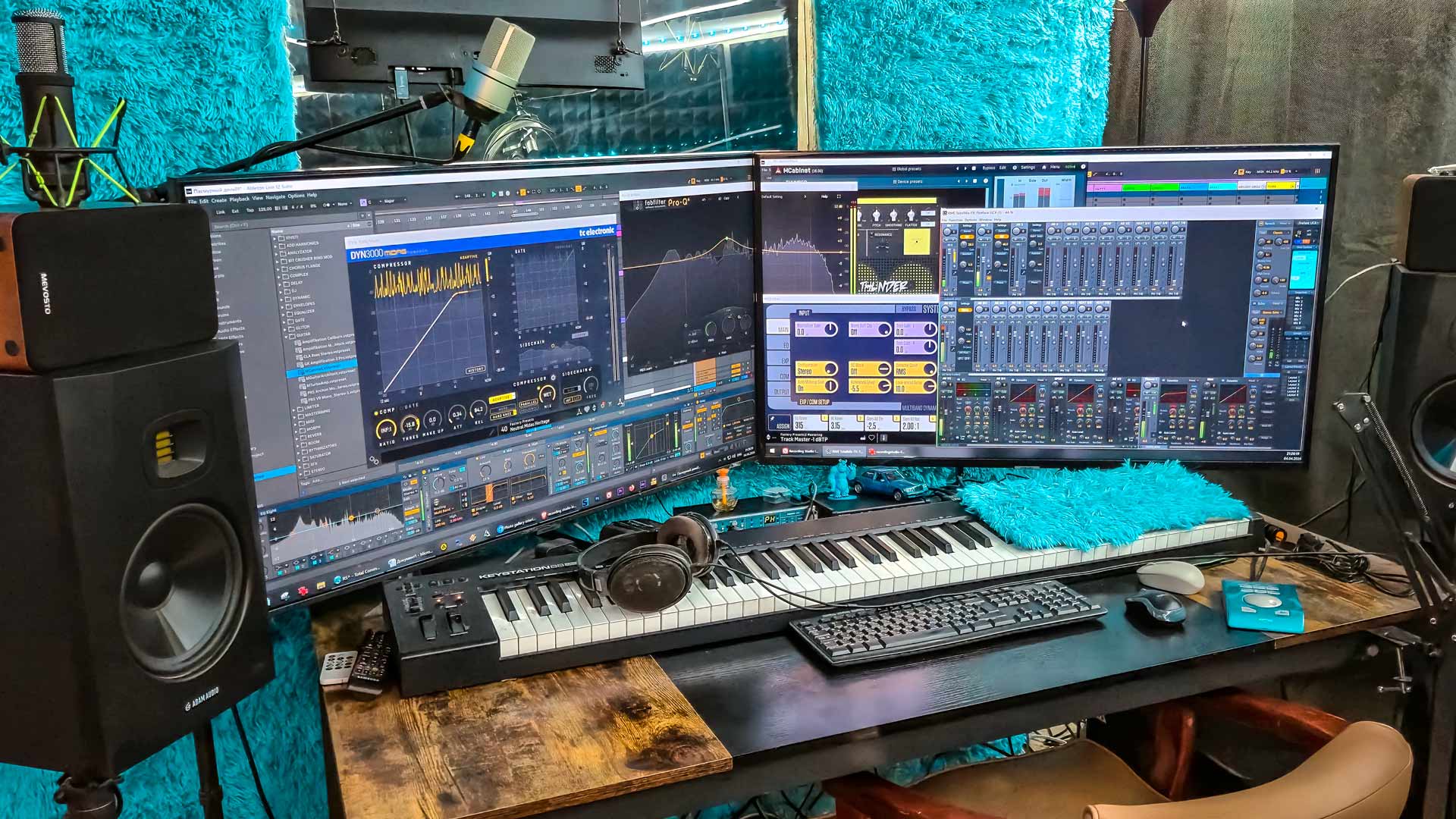
Before a person comes to my studio to record a rap track or a hip-hop track, I would like them to pass through one very important stage of preparation.
Think first.
What are you going to say in this track?
Rap and hip-hop are text-based genres. Of course rhythm matters. Of course flow matters. Of course sound matters. But the text is not some decorative paper on top of the beat. The text is one of the main reasons this genre exists.
So before writing, ask yourself: what is the topic? What is the story? What is the thought? What is the point? What will the listener receive from this track besides another person proving that they can speak over drums?
If there is no thought, no story, no character, no personal angle, then what exactly are we recording? A rhythm exercise? A social media pose? Another foggy cloud of words?
The Usual Problem
One of the most common rap stories is this: I had a hard life, nobody believed in me, I went through struggle, I survived, and now I achieved something.
Good. This can be a real story. This can be a strong story. There is nothing wrong with it.
But there is one problem.
Half of rap history has already said it. Maybe more than half. Fifty trillion tracks already told the listener: I came from difficulty and now I am stronger.
So if you say the same thing in the same general words, what makes your track different?
“I struggled.” Good. How?
“I made it.” Good. Where? From what? Against whom? At what cost?
“I live by my own rules.” Good. Which rules? What did they cost you? What did they save you from? What did they destroy?
General words make general songs. Specific circumstances make a human story.
Story and Character
I would advise every rap artist to put something personal and individual into the text.
It does not even have to be literally autobiographical. It can be fiction. Literature does this all the time. A fictional hero can be more truthful than a lazy autobiography.
But the hero must exist.
Give the hero a fate. Give him character. Give him circumstances. Give him a past. Give him pressure. Give him choices. Give him mistakes. Give him consequences. Give him a reason to speak.
If the story is about a person who had a bad life and achieved something, then do not say it in a fog. Say what exactly happened. What circumstances? What turns in the fate of the hero? What changed? What did he achieve? What position is he in now? What did he lose on the way?
If the story is about a dangerous character, a criminal character, a person living by their own rules and ignoring laws, then again — do not hide behind general words. Write specifically. What makes this character dangerous? What does he actually do? What is his worldview? What are the consequences? Is he proud? Is he trapped? Is he lying to himself? Is he winning or just pretending?
Specific facts create individuality. But even better, they can create plot.
Let the hero change. Let him make conclusions. Let something happen inside the track. Let the listener not only hear words, but follow a human situation.
Meaning
Not every rap track has to be a movie. Not every track needs a full plot, characters, conflict, and ending.
But if there is no story, then there should at least be a thought.
A sentence. A worldview. A conclusion. A sharp observation. A line that makes the listener stop for a second. Some kind of teaching, not in the boring school sense, but in the sense that the artist has understood something and now gives it to the listener.
For this, you need to be a deep person. Or at least try to become one.
Because who wants to listen to the thoughts of a stupid person? Who wants to listen to the thoughts of an immature person? Who wants to listen to a person who has nothing to say but speaks confidently anyway?
The listener does not owe you attention just because you recorded a track.
Either give the listener wisdom, or image, or character, or a plot, or language so bright that even ordinary everyday things suddenly become interesting.
This is the work that should happen before the studio session. This is the skeleton, the road, the internal map of the text.
Coming to the Studio
Let us imagine the artist has read this advice and prepared properly.
The text is not empty. It has a story, or at least a strong thought. It has concrete details. It has a hero. It has a voice. It has some kind of internal direction.
Now the artist comes to my studio.
We sit down. I listen to the arrangement. I look at the text. I understand the beat, the mood, the rhythm, the general direction. We talk briefly about what the track is supposed to be.
Then the artist goes into the vocal room to record.
And this is where another important thing begins: the artist has to perform the text, not just pronounce it.
Performance
If the text has a hero, the performer has to live inside that hero while recording.
Maybe the hero is the artist himself. Maybe the track is autobiographical. Maybe every line comes from real experience.
Good. Then the artist must relive it.
But maybe the hero is fictional. Also good. Then the artist must play him.
Rap performance is much closer to acting than many beginners think. You are not just reading lines. You are voicing a person, a situation, a worldview, a conflict, a memory, a threat, a confession, a victory, a wound.
The delivery has to match the situation.
If the line is direct speech, it should feel like direct speech. If the line is angry, it should not sound like you are politely reading a grocery list. If the line is painful, do not perform fake pain like a school play. Find the real tone. If the line is proud, the voice should stand up. If the line is ironic, let the irony be heard.
Meaningful accents matter. Intonation matters. Pronunciation matters. Breathing matters. Where you attack the word matters. Where you hold back matters. Where you let the listener feel the thought matters.
Ad-Libs and Backs
In rap and hip-hop, additional voices are not just decoration.
Backs, ad-libs, doubles, reactions, emphasized words — they can all support meaning and intonation.
A backing phrase can underline the punchline. An ad-lib can show the character’s attitude. A double can make a line heavier. A small reaction can make the listener feel that the performer believes what he says.
But if the text itself is empty, ad-libs will not save it. You cannot decorate nothing and suddenly get depth.
When the story is prepared, when the hero exists, when the meaning is there, then ad-libs and backs become useful instruments. They help the performance breathe. They help the track become more alive, more theatrical, more convincing.
Recording Takes
In the studio, we record the rap takes.
Not one lazy pass and goodbye. We record properly.
We listen to how the text sits on the beat. We check whether the words are readable. We check whether the rhythm works. We check whether the performance has life. We check whether the artist is actually inside the story or just reciting words from memory.
I give hints where needed.
I point out technical mistakes. I may notice that something is unclear. I may hear that a word is swallowed. I may hear that the energy drops. I may hear that the timing becomes lazy. I may hear that the line needs another intonation.
Sometimes I take the liberty of suggesting something about delivery, pronunciation, accent, or emotional direction.
But I always keep the author’s creative idea untouched.
I am not there to steal the song from the artist. I am there to help the artist say what they came to say.
Studio Guidance
My job is to help the idea materialize.
The idea first exists in the author’s head. There is a thought, a story, a character, an emotional direction. But between the idea in the head and the finished recording there is a dangerous distance.
A weak performance can flatten a good idea.
Bad pronunciation can hide an important line.
Lazy timing can destroy the groove.
Wrong intonation can make a serious line sound ridiculous.
Empty delivery can make a personal story sound like copied text from the internet.
So I help the artist carry the original idea through the microphone, through the recording process, and eventually to the listener.
Carefully. Respectfully. But honestly.
For Beginners
If you have never recorded a rap track before, that is not a tragedy.
Come anyway.
If you have a text, an idea, a beat, and a real desire to make the song better, we can work.
I will help you understand what is happening. We will work in a comfortable and trusting atmosphere. I will point out what needs attention. I will help you with delivery, with rhythm, with pronunciation, with accents, with recording the takes, with making the performance more convincing.
The first track may already be good. The second will be better. The third better again. The fourth even more confident.
This is how a performer grows.
Not by pretending to be a star before doing the work.
By recording, listening, correcting, understanding, trying again, and slowly becoming professional.
The Result
When the text is prepared, when the hero exists, when the story has concrete details, when the artist understands what they are saying, when the delivery matches the situation, when the ad-libs support the meaning, when the takes are recorded properly — then the rap track begins to sound professional.
Not just louder.
Not just cleaner.
Not just with more plugins.
Professional.
Because the listener hears intention. The listener hears a person. The listener hears story, character, rhythm, conviction, and meaning. The listener does not feel that somebody simply came to the studio to say fashionable words into a microphone.
That is the difference between recording a rap vocal and making a rap record.
Record Your Track
If you have a rap or hip-hop track, bring it to the studio. Bring your instrumental, your lyrics, your idea, your story, your character, your thoughts.
Even if you are not experienced yet, we will work together. I will help you understand the recording process, help you perform the text, help you find the right delivery, help you record the takes, and help bring your idea as close as possible to what was originally born in your head.
My goal is not just to press Record. My goal is to help you turn your text and beat into a real track that can be listened to, understood, remembered, and respected.
Come to the studio. We will record your first track, then the second, then the third, then the fourth. And track by track, you will become stronger, more confident, and more professional as an artist.