Inside a Recording Studio Session
Before this, we talked about the voice: how we record it, select takes, tune notes, align timing, and build the vocal sound. But a song is not only a voice. There is another component we have not really touched yet: the instrumental.
This article is not about an arrangement we build from scratch in the studio. This is about the instrumental the artist brings with them — a beat, a minus track, a finished music file, something they made, bought, borrowed, downloaded, or, let us use the loud word, stole. In any case, the artist comes with a backing track, and we record the voice on top of it.
So what do we do with that instrumental? Maybe nothing? Maybe something? Let us speak honestly.
The Instrumental
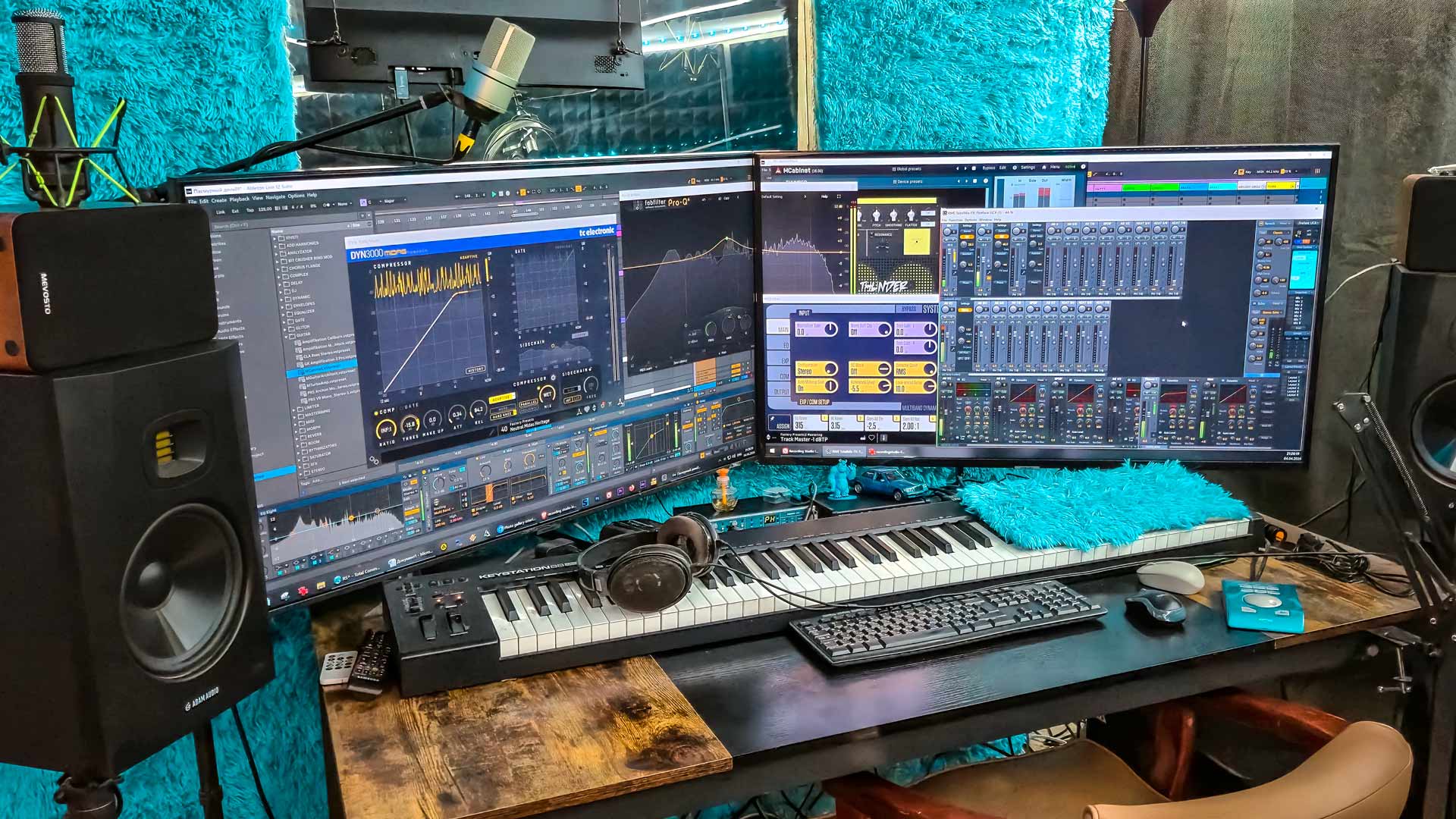
First, where does the instrumental come from?
The artist may have made it themselves. Maybe a friend made it. Maybe a brother, cousin, producer, beatmaker, somebody from the internet. Maybe the artist bought it. Maybe they downloaded it somewhere. Maybe they “borrowed” it. It does not matter for the studio workflow at this moment.
The practical fact is simple: the artist brings a music file, and we have to record the vocal on top of it.
And here we need to separate terms. If we have a full multitrack project, where every instrument is separate, that is one kind of work. That is arrangement, mixing, channel-by-channel work. We will speak about that separately.
But in this article, we are speaking about a finished instrumental as one file. One stereo file. One minus track. One already mixed backing track. We cannot edit every instrument separately. We cannot open the kick, snare, piano, bass, synth, strings, and hi-hats on separate channels. We have what the artist brought.
Structure
Before recording or mixing anything seriously, we simply listen to the instrumental and understand where the song lives inside it.
Where does the vocal begin? Is there an intro? Is there no intro and the voice starts immediately? Where is the first verse? Where is the chorus? Is there a bridge? Is there an instrumental break? Is there a second verse, second chorus, third chorus, ending?
This sounds basic, but it is important. A beat is not just a background noise for the singer. It has form. And the vocal has to enter that form correctly.
Sometimes we may extend a section. Sometimes we may insert a break. Sometimes we may remove a break. Sometimes we cut something shorter. Sometimes the chorus is too long for the real song idea, or the verse needs more space.
So yes, even if the instrumental is one finished file, we can still edit its structure. We can cut, copy, extend, shorten, remove, and arrange sections so the whole song fits the author’s idea.
Workflow
The order can be different.
Sometimes we first edit the instrumental, decide exactly where the vocals will be, remove what is not needed, extend what is needed, and only then record the voice into the correct places.
Sometimes we do the opposite. We record vocals over the instrumental as it is, and only after that we decide: this part should stay, this part should be shorter, this break is not necessary, this chorus should repeat, this section can be copied, this ending should be changed.
There is no universal religion here. The song tells us how to work. The material tells us. The author’s idea tells us.
The task is not to worship the original file. The task is to make the song correct.
Vocal Fit
When we record the vocal on top of the instrumental, we have to listen carefully: does the vocal actually fit there?
Not only emotionally. Musically.
Sometimes the instrumental is one thing, and the vocal melody the artist invented is another thing. The artist may have created a vocal line that does not really sit inside the harmony. A note may sound dissonant not because it is “creative,” but because it simply does not belong there.
In the studio, I hear these places and I can say: here it may be better to replace this dissonant note with a consonant one. Here the melody is fighting the music. Here the vocal phrase wants another solution.
But I always underline this: the author has the right to do what they want. It is their song. I can suggest, warn, explain what I hear. But the author’s idea has priority.
Rhythm and Text
Another practical problem is rhythm and space.
Maybe the verse in the instrumental is sixteen bars, but the artist wrote text as if there were twenty. Maybe the words do not fit. Maybe the line is too long. Maybe the singer has to rush so much that the performance stops sounding natural.
Then we have to decide what to do. Change the text? Change the delivery? Extend the instrumental? Cut something? Move something? Make the structure work differently?
Before we move to serious mixing, we need to make sure the vocal part and the instrumental are adequate to each other. Notes, rhythm, structure, length, entrances, exits — everything must at least be musically possible.
Respecting the Music
The person who made the instrumental is also an author. They may be the artist themselves. They may be a producer. They may be a composer. Whoever they are, there is still a musical idea there.
There is an idea in the notes. There is an idea in the structure. There is an idea in the sound.
So I try not to touch the instrumental more than necessary. I try to preserve the author’s original sound, structure, and musical intention as much as possible.
But sometimes the vocal and instrumental do not cooperate.
Sometimes the problem is harmony. Sometimes it is rhythm. Sometimes it is frequency conflict. Sometimes the vocal and some instrument are trying to be main at the same time. And if everything is main, nothing is main.
Conflicts
There are different kinds of conflicts.
A note conflict: the vocal melody and the instrumental harmony do not conspire together. They create some strange, not very pleasant combination. Not interesting tension. Just a musical disagreement.
A boring conflict: everything is correct, everything consonates, but the vocal and instrumental move too similarly, too equally, too politely. Nothing really speaks. It is all “right,” but it becomes dull.
A frequency conflict: some instrument sticks out exactly where the voice needs to live. Maybe a synth, maybe a piano, maybe a guitar, maybe something bright or sharp or thick in the same area as the vocal. And suddenly the voice has no place.
Sometimes these parts are meant to be closely woven together. That can be beautiful. But sometimes it is just an obvious conflict, an unfinished decision between the arranger and the vocal idea.
Then we need to decide what is more important in that moment.
Priority
This is one of the most important decisions.
What do we leave as the main element right now? The instrument that is sticking out in the arrangement? Or the voice?
Sometimes the vocal should lead, and the instrument should step back. Sometimes the instrument has an important solo phrase, and the vocal should not stand in its way. Sometimes we need them to exchange attention. Sometimes the verse belongs to the voice, and the instrumental answer belongs to the music.
But this decision belongs to the author of the song. I help realize the decision. I can say what I hear. I can suggest that the vocal should be main here. I can suggest that the instrument should stay forward here. But the final artistic priority comes from the author.
Once the decision is made, we use different tools to make one element more important and another one secondary. Maybe with volume. Maybe with filters. Maybe with dynamic multiband processing. Maybe with space. Maybe with arrangement editing. There are many ways.
Balance
The instrumental is a whole group of instruments. Even if it comes as one file, inside it there is still a musical world: drums, bass, harmony, melody, atmosphere, movement.
We compare this whole world with the vocal. Is the voice too loud? Too quiet? Does it disappear in the chorus? Does it sit too much on top in the verse? Does it need to become brighter? Does the backing need to support it? Does the hook need more energy?
And we listen to this balance in motion. Not only one frozen moment. Verse into chorus. Chorus into verse. Ending. Breaks. Places where the song rises. Places where it should become more intimate.
Sometimes the vocal becomes stronger simply by volume. Sometimes not. Sometimes the chorus is stronger because the notes are higher, brighter, more open. Sometimes because the singer performs it more actively. Sometimes because the instrumental leaves more room.
Again: no universal recipe. Only listening, experience, and understanding what this exact song needs.
Space
After balance, we place the voice in space.
Center. Left and right support vocals. Stereo effects. Reverb. Echo. Maybe close to the listener. Maybe slightly farther away. Maybe dry and intimate. Maybe wider and more atmospheric.
We are not adding space because “vocals need reverb.” That is primitive thinking. We add space because this particular song needs a certain position for the voice.
If the vocal is too close, it may feel disconnected from the instrumental. If it is too far, it may lose authority. If the effects are wrong, the voice may stop belonging to the track.
The goal is not to decorate the vocal randomly. The goal is to make the voice and instrumental sound like they live in one musical reality.
Effects
Then we add effects where they are appropriate.
Not every style wants the same vocal effects. Not every instrumental tolerates the same amount of echo. Somewhere a strong effect on the voice is beautiful. Somewhere it becomes cheap. Somewhere it helps the track breathe. Somewhere it only distracts.
The decision depends on the style of music and on the exact arrangement the artist brought. A rap vocal, a pop vocal, a dance vocal, a soft emotional vocal — they can all need different treatment.
So we listen, decide, try, correct, and leave only what helps the song.
Complete Song
The final goal is not simply to put a voice on top of a beat.
The goal is to make the instrumental and the voice feel inseparable. One track. One structure. One emotional movement. Intro, verse, chorus, transitions, ending — everything should listen as a whole.
We leave space for the vocal by frequency, by dynamics, by balance, by arrangement decisions, by effects, by musical priority. We listen to the entire song and ask the most important question: does anything interfere with listening?
If the ear catches something ugly, we fix it. If the vocal disappears, we make room. If the instrumental loses power, we adjust carefully. If the chorus does not open, we search for why. If the track already works, we do not destroy it just to look busy.
This is how work with a client instrumental happens in the studio. Not with one universal preset. Not with “make vocal louder” and goodbye. With listening, experience, respect for the author’s idea, and the ability to make the voice and music stop fighting each other.
Bring Your Instrumental
If you already have an instrumental, bring it to the studio. We will listen to it, understand the structure, record the vocal, check how the melody fits, see whether the words fit the timing, balance the voice with the music, create space, and make the track sound like one complete song.
You can rely on my experience and my ears. I will not fight your idea. I will help you realize it and make it sound professional.
Come to the studio. We will work on your song the same way: carefully, musically, practically, and with respect for what you are trying to create.