Musician Psychology and Recording Confidence
Perfect pitch does not automatically create believable music.
This is one of the hardest truths for technically obsessed musicians to accept.
People do not emotionally react only to precision.
People react to pressure. Intention. Vulnerability. Instability. Human tension. Emotional risk.
At Ronter Sound Recording Studio Philadelphia, I constantly hear technically weaker takes emotionally destroy cleaner and more “correct” takes.
Why?
Because music is not engineering mathematics pretending to be emotion.
Music is emotional pressure organized into sound.
This page connects with why confidence changes vocal tone, fear of recording vocals, creative block during recording, voice and vocal recording, and vocal production, because emotionally convincing music is never created only through technical perfection.
Technical Perfection
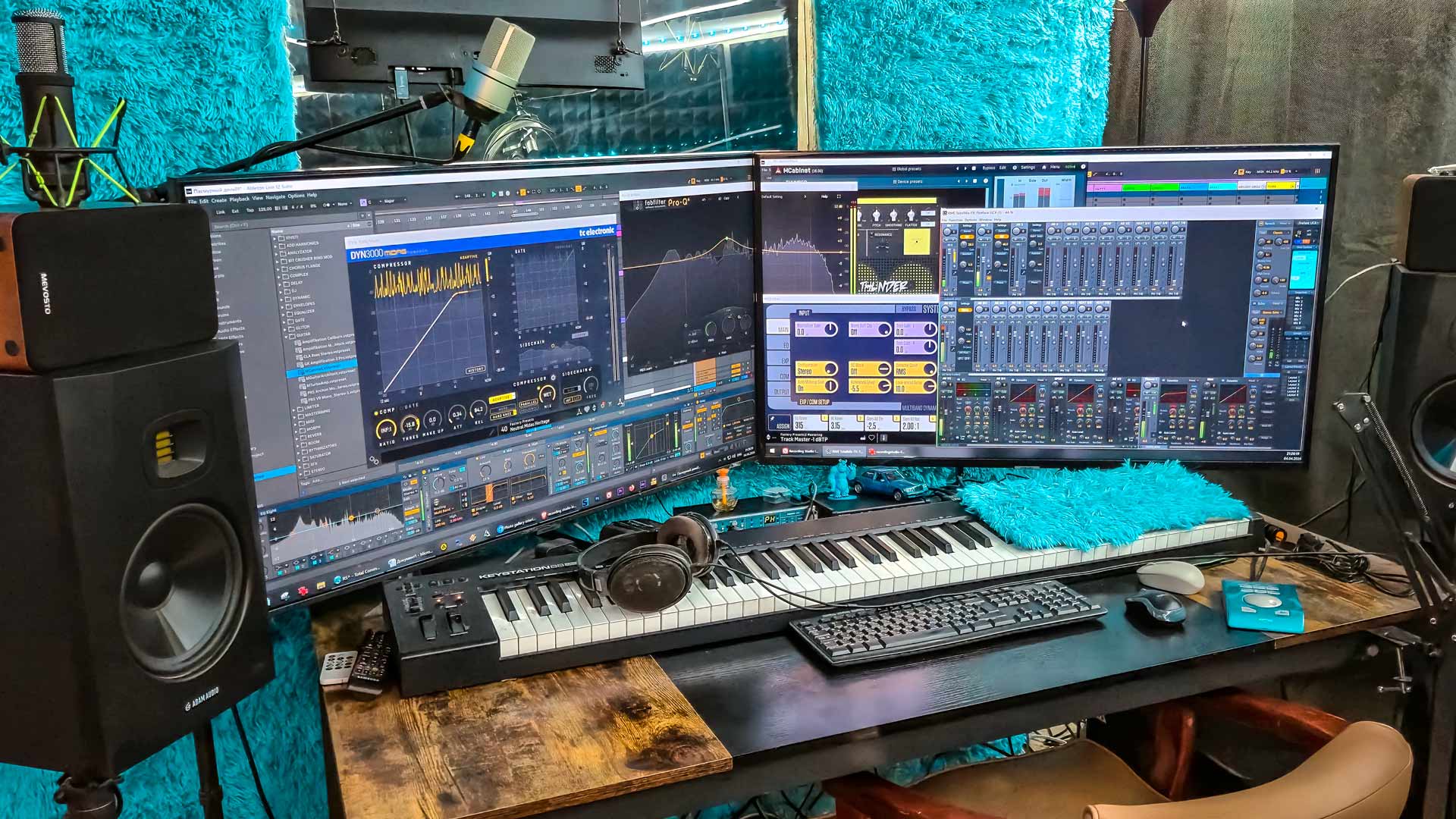
Modern recording technology allows people to polish vocals almost infinitely.
Every note can be tuned. Every breath can be aligned. Every consonant can be cleaned. Every rhythmic fluctuation can be snapped to the grid.
Eventually something strange starts happening.
The vocals become technically cleaner…
while emotionally becoming emptier.
Because excessive perfection often removes the very instability that makes human expression believable.
Real emotion is not perfectly geometrical.
Real emotion breathes unevenly. Pushes unevenly. Trembles unevenly. Lands unevenly.
Human beings are not laboratory oscillators.
And when vocals become too mechanically ideal, listeners often stop emotionally believing them.
Emotional Reality
Listeners physically feel emotional pressure inside sound.
That is the important thing many people underestimate.
Human hearing is not only frequency analysis.
People subconsciously hear:
That is why some technically imperfect vocals suddenly feel incredibly alive.
The listener feels: “this person actually means what they are saying.”
And belief is more powerful than sterile precision.
Music without emotional belief becomes decorative sound design.
Imperfection
There is an important distinction:
Human imperfection is not the same thing as bad singing.
Completely chaotic, uncontrolled, out-of-time, out-of-tune vocals are not automatically emotional masterpieces.
Technique still matters enormously.
But inside good singing there are always microfluctuations.
Tiny rhythmic pushes. Tiny breathing changes. Tiny instabilities. Tiny dynamic irregularities.
Those things create life.
Excessive correction often removes these microscopic human irregularities and replaces them with digital geometric smoothness.
Then people wonder: “Why does this sound so clean but emotionally empty?”
Because humans emotionally react to controlled instability.
Living Takes
Some takes immediately feel different.
Engineers hear it. Producers hear it. Even ordinary listeners hear it.
Sometimes the singer technically sang weaker than in previous takes.
But suddenly: the song feels alive.
Why?
Because something emotionally dangerous entered the performance.
The singer stopped controlling every atom perfectly and started emotionally committing to the phrase.
Living takes usually contain:
Perfectly safe vocals are often emotionally forgettable.
Controlled Instability
This is something modern production culture often forgets.
Humans are emotionally reactive creatures.
Emotional systems react to movement, uncertainty, pressure, friction, release, expectation, danger, and tension.
Completely sterilized music removes too much of this.
Music becomes mathematically stable but emotionally flat.
This is why many old recordings still feel shockingly alive despite technical imperfections.
Because the musicians were interacting with real pressure in real time.
Tiny timing fluctuations. Tiny pushes. Tiny drags. Tiny hesitations. Tiny explosions.
Those things create human movement inside music.
Overprocessing
Modern music often suffers from overprocessing addiction.
Endless tuning. Endless alignment. Endless editing. Endless polishing.
At some point engineers stop improving the performance and begin flattening it.
Emotional pressure becomes compressed into sterile predictability.
Every note lands perfectly. Every syllable aligns perfectly. Every phrase behaves perfectly.
Meanwhile the humanity slowly disappears.
Real emotional singing is not perfectly robotic.
Real emotional singing contains:
Lifeless Perfection
Because perfection alone does not automatically contain meaning.
Music is not Olympic gymnastics scoring.
Listeners rarely emotionally collapse because somebody perfectly hit twelve notes in a row.
Listeners emotionally collapse when they feel:
Technique helps communicate emotion.
But technique itself is not the emotional event.
This is where many modern vocalists get trapped.
They obsess over correctness while forgetting to emotionally transmit anything real.
Emotion Versus Technique
This does not mean technique is useless.
Terrible technique can absolutely destroy music too.
Rhythm matters. Pitch matters. Control matters. Breath matters. Timing matters.
But technique is infrastructure.
Emotion is the electricity moving through the structure.
Perfectly built infrastructure without emotional current becomes cold architecture.
Music needs both.
But if one must dominate emotionally, listeners almost always choose life over sterile correctness.
Emotional Belief
Human beings are extremely sensitive to emotional authenticity.
Long before people intellectually analyze music, the nervous system already reacts to emotional signals inside sound.
People feel:
This is why some rough emotional performances become unforgettable while technically superior performances disappear emotionally after thirty seconds.
Human beings do not only consume sound.
They subconsciously consume emotional states transmitted through sound.
Risk
Safe performances often become emotionally forgettable.
Great performances usually contain some danger inside them.
Not chaos.
Not incompetence.
But emotional danger.
The possibility that the singer might emotionally lose control.
The feeling that something real is happening instead of perfectly managed simulation.
That tension creates life.
Excessive perfection often removes all danger from music.
Then the song becomes technically impressive but emotionally inactive.
Final Thought
Music is not only about correctness.
Music is about emotional transmission.
Technique matters enormously.
But technique without emotional life eventually becomes sterile demonstration.
Human beings react to:
That is why some technically imperfect vocals remain legendary while countless perfectly polished modern recordings emotionally evaporate immediately after playback ends.
People remember life.
Not geometry.
Musician Psychology and Recording Confidence
Recording music is not only about microphones, plugins, editing, tuning, or technical precision.
Fear changes breathing. Confidence changes tone. Perfectionism changes timing. Emotional pressure changes phrasing. Self-consciousness changes the body physically.
These articles explore the psychological and human side of recording music, singing, emotional performance, creative paralysis, self-perception, confidence, and why emotionally alive recordings affect listeners differently from technically sterile ones.
Main hub for recording psychology, emotional performance, vocal confidence, perfectionism, fear, self-perception, and the human side of music recording.
Why recorded voice sounds strange, why people dislike hearing themselves, and the psychology behind hearing your own voice through recordings and microphones.
Fear of singing into microphones, recording anxiety, nervousness in studio sessions, self-monitoring, and psychological pressure during vocal recording.
Creative paralysis, overthinking, perfectionism, songwriting block, emotional exhaustion, and why too much self-control can freeze musical ideas.
How confidence physically changes the voice, why nervousness changes tone, and how the nervous system directly affects vocal sound and emotional delivery.
Why emotional vocals often sound more powerful than technically perfect singing, why some takes feel alive, and why sterile perfection can emotionally kill music.