Music Genre Recording Services
Before people start talking about “rock spirit,” “rock authenticity,” “real music,” “rawness,” “human chaos,” and all the rest of this romantic mythology, let us first define what rock actually is from the point of view of a recording studio.
Because concerts and recording studios are two completely different realities.
From the point of view of a recording studio, rock is first of all an instrumental setup.
Drums. Bass guitar. Rhythm guitar. Lead guitar. Some keyboards. Some vocals.
That is the foundation.
And then different rock styles appear not because somebody invented completely different music from scratch, but because those same instruments begin sounding differently through: distortion, amplification, processing chains, presets, articulation, arrangement, dynamics, rhythm, emotional presentation, playing style, and tonal decisions.
But the technological basis itself remains almost identical.
Metal. Indie rock. Alternative rock. Hardcore. Classic rock. Heavy rock. Atmospheric rock.
Different aesthetics. Same instrumental foundation.
People love pretending that every rock subgenre is some mystical separate universe.
From the point of view of studio workflow, it is mostly the same instruments processed differently.
Different guitar tone. Different drum character. Different vocal behavior. Different density. Different emotional pressure. Different chains of processing.
But the setup itself remains recognizable.
And this is why personally I do not divide rock music into fifty mystical categories during recording.
I first see: instruments, performances, timing, dynamics, arrangements, technical level, and emotional direction.
Then afterward we shape the sound into whatever exact rock direction the artists actually want.
At Ronter Sound Recording Studio Philadelphia, I personally prefer recording raw source material first.
Guitars into line. Bass into line. Raw clean signal first.
Then afterward shaping distortion, aggression, atmosphere, density, and stylistic direction during production and mixing.
Because once you permanently destroy source material with bad decisions during recording, sometimes there is no way back anymore.
Rock Myths
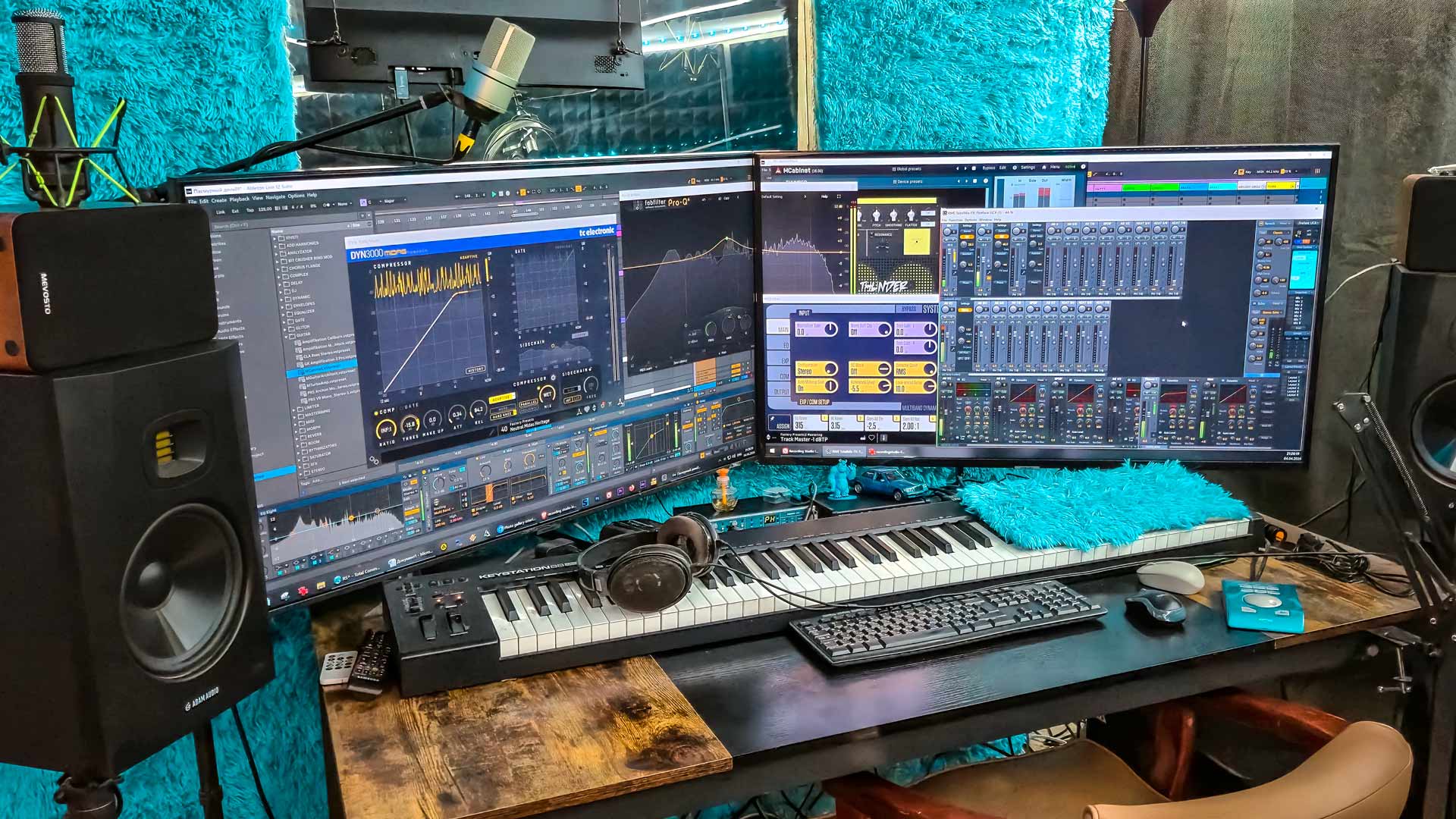
Another thing I completely disagree with is the constant mythology that rock music is somehow automatically “more human,” “more emotional,” “more honest,” or “more real” than everything else.
I do not agree with that at all.
Every genre is simply another expressive language.
A rapper expresses emotion through rhythm and speech.
A blues guitarist expresses emotion through bends and phrasing.
A rock vocalist expresses emotion through guitars, dynamics, heaviness, aggression, pressure, and atmosphere.
But fundamentally all of them are still trying to do the same thing: communicate human thought and emotion through music.
Rock is not automatically deeper.
Rock is simply another artistic language built on another instrumental setup and another sonic aesthetic.
People romanticize rock because distorted guitars and live drums create physical energy very effectively.
But emotional authenticity itself can exist in any genre.
Good music is good music.
Fake emotion is fake emotion.
Genre does not magically save dishonesty.
Musicianship
One of the dumbest myths about rock and heavy music is the idea that technical skill somehow becomes unnecessary because “everything is distorted anyway.”
Completely false.
Distortion can partially mask imperfections.
But distortion does not magically transform weak musicianship into greatness.
Jimmy Hendrix did not become Jimmy Hendrix by playing guitar like a third grader.
Technical skill still matters enormously.
Timing still matters enormously.
Dynamics still matter enormously.
Arrangement still matters enormously.
Technique still matters enormously.
Some people try romanticizing weak playing by calling it “raw.”
Weak playing is still weak playing.
Bad timing is still bad timing.
Weak musicianship does not suddenly become genius because somebody adds distortion and calls it indie rock.
Some people also confuse “human timing” with bad timing.
Those are not the same thing at all.
Good musicians still control rhythm.
Good musicians still understand dynamics.
Good musicians still understand precision.
Small human fluctuations can make performances feel alive, but those fluctuations only become interesting after mastery already exists underneath them.
Humanity does not replace mastery.
Humanity becomes interesting on top of mastery.
Aggressive Vocals
Aggressive vocal recording is physical work.
Real physical work.
Especially: scream vocal recording, metal screaming recording, aggressive vocal recording, hardcore vocal recording, distorted vocals recording, death metal vocals recording, recording screamed vocals, heavy vocal recording.
People who think screaming is simply yelling into a microphone usually destroy their voices very quickly.
Weak technique collapses immediately under aggressive vocals.
Breath control disappears. Timing collapses. Diction disappears. Stamina disappears.
And instead of heaviness, listeners hear exhausted chaos.
Good aggressive vocals are controlled.
The performer still controls: breathing, timing, articulation, pressure, dynamics, and emotional direction.
Aggression itself does not automatically make vocals convincing.
Fake aggression sounds ridiculous almost immediately because listeners instantly hear when somebody is pretending instead of actually transmitting emotional pressure.
Some people think screaming louder automatically creates heaviness.
It does not.
Control creates heaviness.
Timing creates heaviness.
Precision creates heaviness.
Dynamic contrast creates heaviness.
Some quiet moments can make heavy moments feel much heavier afterward.
Constant screaming without dynamics often becomes emotionally flat and exhausting very quickly.
Production Philosophy
Excessive editing can absolutely damage rock music.
Excessive quantization. Excessive alignment. Excessive correction. Excessive perfectionism.
Eventually everything starts sounding sterile and emotionally dead.
Especially drums.
Sometimes perfectly aligned drums completely destroy the sense that actual human beings are interacting together.
But this does not mean weak playing suddenly becomes good.
This is important.
Some people misunderstand criticism of overediting and start thinking: “Great, then technique does not matter.”
No.
Technique matters enormously.
The problem is not precision itself.
The problem is when production sterilizes the natural movement of already good musicians.
Some small human instability can create movement, tension, and realism.
But only after strong musicianship already exists underneath it.
Bad playing does not become emotionally profound because somebody forgot how to play to a click.
Weak rhythm does not become art because somebody calls it “organic.”
And weak musicianship does not become genius because somebody labels it “raw.”
Indie and Alternative Rock
Indie rock and alternative rock often intentionally preserve emotional vulnerability.
Cracks in the voice. Fragility. Exhaustion. Uncertainty. Emotional instability.
Those things can absolutely become part of artistic expression.
But again: there is a gigantic difference between emotional vulnerability and simple incompetence.
Some people confuse “rawness” with poor quality.
Those are not the same thing.
Organic rock recording still requires: strong performances, strong arrangements, good microphones, intelligent mixing, emotional control, and competent production.
Emotional vulnerability becomes powerful only when performers actually understand what they are doing.
Otherwise listeners simply hear weak singing or weak playing.
Band Chemistry
Rock music historically comes from people physically playing together.
And that interaction still matters enormously.
Sometimes technically strong live band recording feels incredible because musicians are reacting to each other in real time.
Listeners subconsciously hear that interaction.
That energy is difficult to fake artificially.
But again: this does not mean sloppiness becomes good automatically.
The strongest bands are usually bands where musicians are technically strong first and emotionally connected second.
Not the other way around.
Some people romanticize chaos because they cannot play well.
That is not artistry.
Real artistry appears when musicians become masters of their instruments first and then begin expressing humanity through that mastery.
Recording Philosophy
This is probably the most important thing I would say to any rock band.
Stop romanticizing weakness.
Stop romanticizing bad timing.
Stop romanticizing weak technique.
Become masters.
Practice.
Develop timing.
Develop control.
Develop technique.
Learn your instruments deeply.
Learn how to record properly.
Learn how to perform properly.
Then after mastery already exists, small human fluctuations can make performances feel alive.
Humanity becomes beautiful when it exists on top of discipline and control.
Not instead of them.
At Ronter Sound, the goal is not manufacturing fake perfection.
The goal is preserving: energy, dynamics, atmosphere, aggression, movement, and humanity while still building recordings on top of real musicianship and real technical skill.