Ronter Sound • Manifesto of Art and Talent
Music is not decoration for life. It is one of the languages through which a human being speaks to the world, to other people, and to themselves.
I love music as a miracle of the universe so deeply that I am always genuinely happy whenever someone wants to become a musician. I do not feel jealousy, I do not see competition, I do not think: “why do we need another one?” Quite the opposite - I rejoice. Because another person is entering the world that I myself live in. Another person begins to hear, feel, understand, and maybe one day say something of their own.
To me, this is not a small thing. If there is one more musician in the world, then the world itself has become larger. It gained another ear, another heart, another inner voice, another attempt to express beauty. And beauty is never unnecessary.
Some people treat other musicians like rivals. I cannot. Musicians are not enemies or competitors to me. They are citizens of the same country. A country of aesthetically developed people. People capable of hearing harmony, feeling rhythm, understanding movement inside a musical phrase, sensing what words often fail to express.
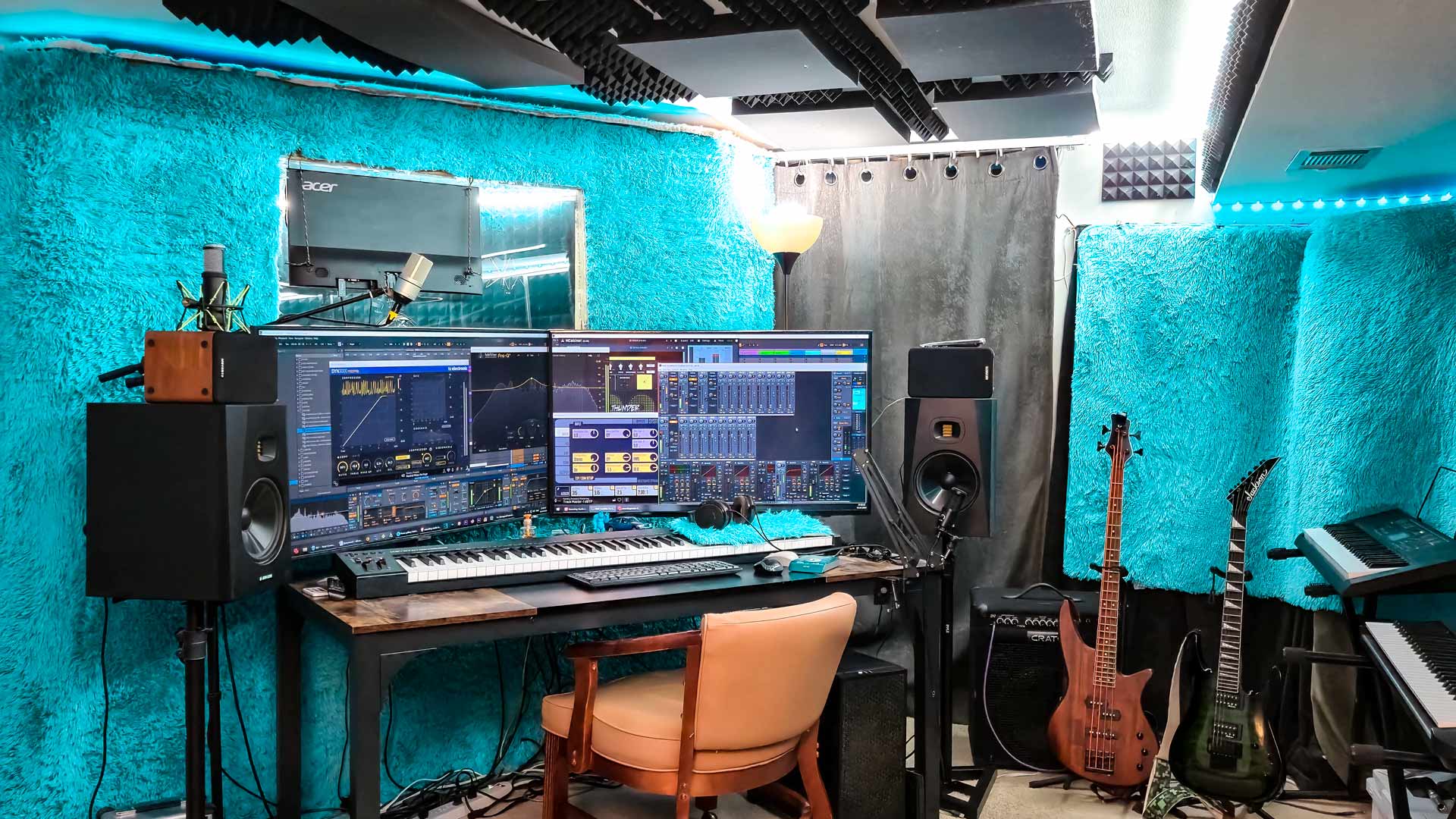
To me, music is a way of expressing suddenly discovered beauty. Beauty in harmony, in the development of a musical phrase, in the way rhythm, harmony, pauses, tension, and release shape and polish it.
But music is not only beauty. It is also a protocol of communication. A special language through which one musician can say something to another that would be awkward, impossible, or painfully incomplete if explained with ordinary words.
There are moments when someone plays - and you understand. Not because they explained it. Not because they formulated it into sentences. But because through notes, rhythm, tone, and harmony, they spoke directly to you. And suddenly you understood. And for a second, both of you freeze inside that unity.
Notes are only the visible part of the iceberg. They look like symbols, but music itself is not limited to notes. Notes are merely signs that people are speaking about the same thing, feeling the same thing, existing inside the same wave. Otherwise they would not play together. Otherwise they would play separately.
When people play music together, something larger than sound frequencies passes through them. A wave moves through them, connecting them without taking away their freedom. Each person remains themselves, yet suddenly exists inside a shared field. It is a rare state. A profoundly human one.
Music is extraordinary because it is immaterial, subtle, almost untouchable for the creator, yet deeply understandable for the listener. A person may have no musical education at all and still hear immediately: this music is sad, this one is anxious, this one is bright, this one pushes forward, this one mourns, this one celebrates.
Other forms of art are often harder to grasp. Sculpture can be interpreted endlessly. Paintings may require explanation. Dance may remain unclear without preparation. But music enters directly. It does not ask permission from the intellect. It moves through hearing, body, memory, nervous system, associations, experience, pain, and joy.
Because music does not describe objects. It describes states of being.
Words communicate meaning. Notes communicate meaning through relationships between notes. In that sense, music is closer to how the human soul actually exists. The mind speaks in sentences. The soul rarely does. The soul sings or cries.
A person may cry with their soul and still fail to say anything. But they can play the blues - and suddenly everyone understands.
That is why the phrase:
“Blues is when a good person feels bad”
feels so true. It does not fully explain the blues. But it opens the door.
Music is a language for describing the world. Like mathematics. Like words. But different.
Mathematics describes relationships between numbers, shapes, and proportions. Language describes objects, events, and ideas. Music describes the internal sensation of reality. Not the fact itself, but how that fact resonates inside a human being.
Rhythm is a pulse within which notes live. It is measurement, organization, movement. It gives music a body. Without rhythm, melody can dissolve. Rhythm gathers it together and gives it breath, steps, movement, and direction.
Harmony is the combination of sounds that creates emotional response. We may not know music theory, chord names, or why one sound pulls downward while another lifts upward, why one creates anxiety and another creates peace. Yet we still feel it.
Frequencies merge mathematically. But humans experience that merger emotionally. That is the miracle. Mathematics becomes feeling. Structure becomes beauty.
A human being must give something back to the world in exchange for existing. Otherwise life turns into nothing more than converting solar energy into consumption. Eat, sleep, work, spend, die. But where is the trace? Where is the expression? Where is the thing that passed through you and became part of the world?
Some people raise children. Some build houses. Some carve wooden figures. Some write books. Some plant gardens. Some write songs. The forms are different, but the meaning is the same: humans create because without creativity they become miserable.
Creativity is not luxury. It is not something for “when there is free time.” It is one of the ways to remain human. A way not to become a mechanism. A way to tell the world: I existed, I felt, I understood, I left something behind.
Music is especially powerful because it addresses the whole human being at once. Body, hearing, memory, emotion, intellect, intuition. It does not simply inform. It makes a person resonate.
And when a person creates music for the first time, something important happens. They did not simply play notes. For the first time they affected the universe not with force, not with objects, but with sound. They made its inner strings vibrate.
I do not believe music is “only for some people.” Yes, talent is rare. True exceptional talent is genuinely uncommon. Most people probably do not possess it. But musicality exists in almost everyone.
The problem is usually not the absence of musicality. The problem is that a person never entered an environment where it could awaken. Just as a child raised without language would never learn to speak, a person may never discover musicality if nobody around them nurtured hearing, rhythm, curiosity, and expression.
Music is a language. And language can be learned. First a person studies separate elements: rhythm, notes, harmony, intervals, ear training, instruments, voice. At first it may seem dry and pointless. Like grammar or an alphabet.
But then one day something changes. Yesterday you were painfully memorizing symbols. Today you suddenly realize you can read Shakespeare. Slowly, awkwardly, syllable by syllable - but yourself. And then you understand why all of it mattered.
Music works the same way. At first a person merely distinguishes sounds. Then they begin hearing. Then understanding. Then anticipating. Then noticing beauty where before there was only noise.
And eventually they no longer merely listen to music. They begin speaking it.
When someone says “I have no talent,” I will not comfort them with empty sweetness and pretend talent exists equally in everyone. It does not. Talent is rare.
To me, talent is a person who seems born already connected to the matrix of the universe’s musical language. They instinctively hear structures, feel movement, understand shape, as if they themselves are a musical instrument and one of the nodes inside this immense musical network.
But if talent is absent, that is not the end. First of all - maybe it exists and you simply never discovered it. Second - discipline, work, love for music, and dedication compensate for far more than people think. A person may never become a genius and still become a master. And the world benefits from that.
Even if a person remains an amateur, the world already wins. Because an amateur who truly loves music, hears music, plays music, understands music, is not a “failed professional.” They are simply a human being who became richer inside.
Music has value in itself. It does not always need to become a career, money, contracts, or stages. Sometimes it is enough that a person touched music deeply and can never fully detach from it again. That alone becomes a path of self-development.
Almost everyone can listen to music. But understanding music is a different level of joy entirely.
The happiest listeners are often the people reading sheet music silently in a room. To an outsider that may sound absurd. How can somebody feel joy by staring at symbols in silence? But musicians already hear those symbols internally. The music unfolds inside them.
To understand music means to see through it. To anticipate where it may move. To feel where it wants to go. And to especially love the moment when the composer lets you predict the next move - only to deceive you beautifully and choose another direction.
This is one of the great pleasures of art. You are not simply consuming sound. You are participating in another person’s thinking. You follow them, argue with them, anticipate them, fail to predict them, and become surprised by them.
Music teaches attention. And attention is one of the forms of love.
Music is unregulated aesthetics of the creator’s inner request. Songs may be banned. Performances may be banned. Stages may be banned. But the musical emotion itself is much harder to imprison.
Tyranny always finds it easier to attack words. Words can be labeled dangerous, unacceptable, forbidden. But music slips away. Everyone hears it. Everyone feels it. Everyone understands something - yet interpretations remain endless.
In this sense music is free. It can express things even when everything else becomes forbidden or humiliated.
And the person who begins singing, playing, composing, improvising also becomes freer. At least inside the language of music. There is a reason songs so often become symbols of revolutions, memory, hope, and resistance.
Fear itself is sometimes weakened by singing. A strange thing happens: a person who is afraid to speak may suddenly be able to sing. Because a singing human being is no longer merely explaining. They are resonating.
Children often develop musicality naturally and rapidly. They have not yet built walls of shame around themselves. They can sing, move, repeat rhythms, enjoy sound freely. And that is exactly why children’s musicality is also easy to destroy.
Through mockery. Through indifference. Through pressure. Through demands for immediate “usefulness.” Through attempts to turn a child not into a human being, but into a cash machine.
If a child genuinely reaches toward music, that matters. It is not nonsense. It is not a trivial hobby. It is a fundamental module for understanding the world and transmitting oneself back into the world.
To parents who believe music is impractical, unserious, or unprofitable, I would say: you are trying to turn your child into a mechanism. But they are a human being, not iron and not a robot. Let them remain human.
In the age of artificial intelligence and automation, humanity itself becomes increasingly valuable. The more emotionally alive, creative, and sensitive a person is, the more attractive and necessary they become to others.
That is why love for music should be nurtured. Not through force. Not through obligation. Not through “one lesson a week just because.” But through atmosphere, curiosity, discovery, and joy.
When a person begins understanding music, it feels as if another sensory organ opens inside them.
They no longer hear only sound. They hear relationships. Tension. Release. Anticipation. Surprise. Hidden beauty. And this sensitivity gradually spreads beyond music itself.
A person who once discovered beauty inside harmony begins suspecting that beauty also exists elsewhere: in architecture, conversation, movement, silence, thought, and human behavior.
Music often becomes the first doorway into all art. Through music a person discovers that there are layers beneath reality. Depth. Hidden beauty. Things that cannot merely be consumed, but must be uncovered.
And then the person themselves becomes larger inside. They know more, feel more, and are able to express more.
Music connects people faster than many conversations ever can. Sometimes two people only need to play together once for a thread to appear between them.
They may come from different countries, social classes, languages, or life experiences. But once they enter the same musical fabric, they already understand each other more deeply than ordinary introductions usually allow.
Music dissolves barriers. Not because it makes everyone identical. Quite the opposite. It preserves individuality while giving people a shared wave to exist inside.
This matters deeply. To be understood is one of the most powerful human needs. Music offers a chance to be understood even where words fail completely.
Sometimes people say music is useless.
In a purely practical sense, maybe it is. Music cannot hammer nails. It cannot replace food. It is not a wrench or a machine.
But music is not an object. Music is a language. It describes. It expresses. It connects. It amplifies. It makes visible the things that otherwise would remain trapped inside and die unspoken.
If a person has never found a use for music, that does not mean music is empty. It means the person has not yet discovered what they themselves wish to say through that language.
Music becomes silent only where the human being never learned how to ask it questions.
I do not simply want to “teach music.” That feels far too small for what music actually is.
My mission is to take a person by the hand and lead them into this world. To teach them to hear. To distinguish. To feel rhythm. To understand harmony. To notice beauty where before there was only sound.
I teach rhythm, ear training, music analysis, instruments, solfège, vocal thinking - but not for dry academic theory and not for certificates.
All of this exists so a person may receive a language. So that the soul, which previously had neither eyes nor mouth, may finally begin seeing and speaking.
Music is a method of expressing the soul. As if the inner world suddenly gained a way to emerge outward - not crudely, not flatly, not through everyday phrases, but through sound, movement, harmony, and emotional shape.
And if someone becomes a musician after this, I will be happy. Even if they become a musician somewhere else. Even if I never earn money from it. I love music more than money.
If I had guaranteed shelter and food for life, I would gladly help new musicians for free. Because every new person entering music is not a lost customer and not a competitor. They are another voice joining the great choir of the world.
If you are afraid that you are “not musical” - begin.
If you think it is too late - begin.
If you are ashamed of your voice - begin.
If you think you have no talent - especially then, begin. Because the truly tragic thing is not failing to become a great musician. The tragic thing is never trying at all.
Perhaps the world needed exactly the music only you could bring into it. Perhaps your melody, your song, your understanding, your voice never appeared. And then not only you lost something. The world lost your music.
Music simply needs to be loved. Once that love exists, everything connected to it becomes joy: rhythm, exercises, ear training, mistakes, repetitions, awkward first attempts, and small victories.
Become musicians. It will open you. You will begin feeling the world differently. And most importantly - you will begin feeling yourselves differently.
Human beings are creators. Without creativity they become miserable. And music possesses one of the strongest creative potentials of all, because it gives the soul a voice.