Inside a Recording Studio Session
An artist comes to the studio with an instrumental. Maybe somebody made it for them. Maybe they bought it. Maybe they downloaded it from a stock site. Maybe a producer sent it. And now the artist wants to record vocals, release the song, and put it on streaming platforms.
Good. But before we behave like everything is simple, there is one boring but very dangerous question: who actually owns the rights to that arrangement?
This article is not legal advice. I am not your lawyer. I am speaking as a studio owner, sound engineer, music producer, and label-side person who has seen how musicians can get into stupid, exhausting, unnecessary problems because they thought: “I bought the beat, so everything is mine now.” Sometimes yes. Sometimes no. And that “sometimes no” can ruin the whole release process.
The Real Question
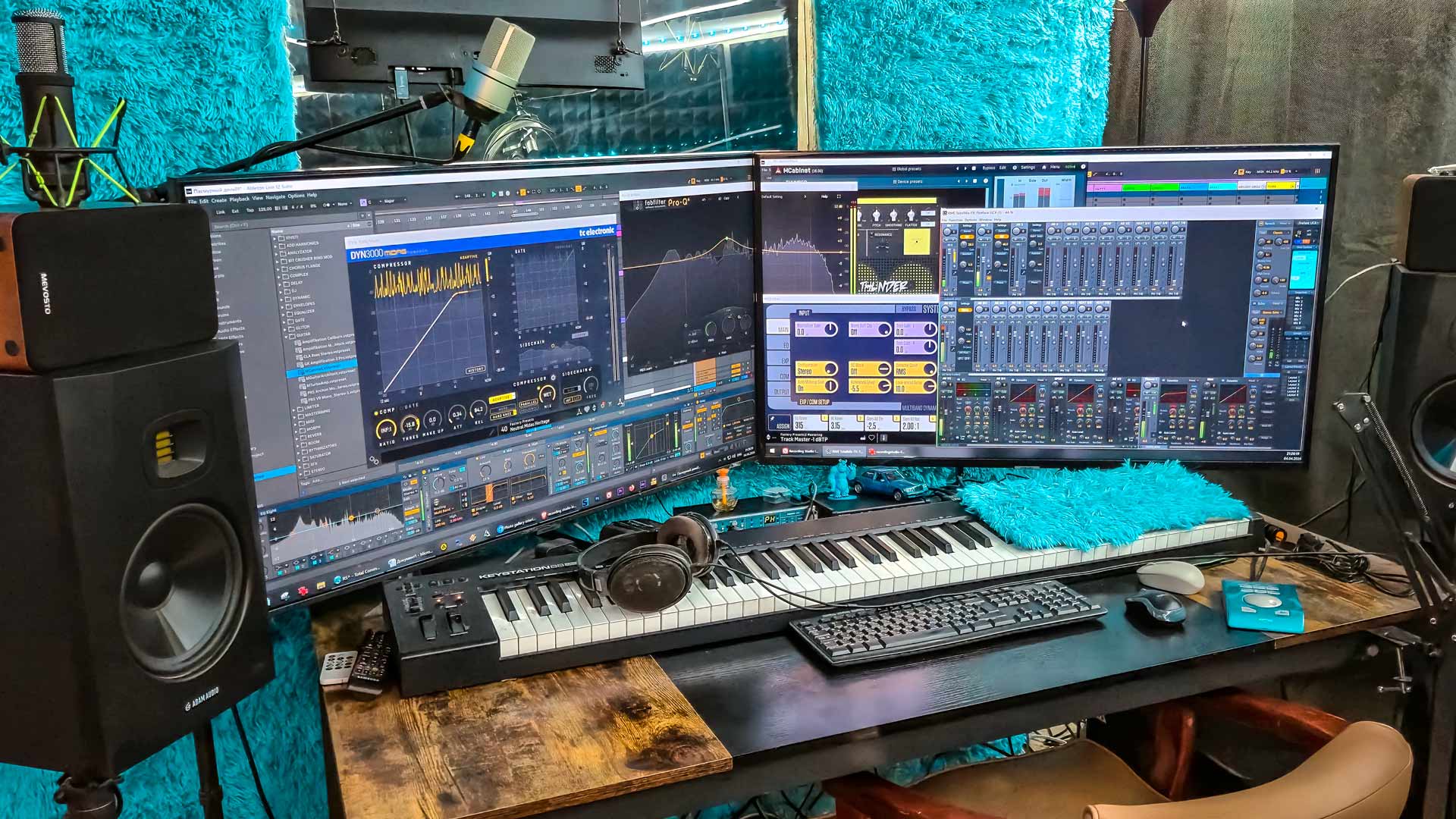
The artist brings an arrangement. A beat. A minus track. A finished instrumental. Maybe they paid somebody for it. Maybe they ordered it from a producer. Maybe they bought it from some website. Maybe they downloaded it from a stock library. Maybe they found it somewhere and decided not to ask too many questions.
But a file on your computer is not automatically legal ownership.
The important question is not only “Do you have the music?” The important question is: do you have the right to use this music in your song, release it commercially, distribute it, monetize it, and defend that release if somebody asks questions later?
That is where many artists start walking through fog. They have the instrumental. They have the vocals. They have the song. They are excited. They want to release. But the legal side of the arrangement is unclear.
And unclear rights are not romance. Unclear rights are future headache.
Where It Came From
If somebody wrote the arrangement for you, the first question is simple: what did they transfer to you?
Did they only send you an audio file? Did they sell you the right to use it once? Did they give you exclusive rights? Did they remain the author while giving you a license? Did you receive any written agreement at all? Or was it just a message like “bro, it’s yours” and now everybody pretends that this is documentation?
In music, “he made it for me” is not always enough. “I paid him” is not always enough either. Payment is one fact. Rights are another fact.
Maybe the arrangement is truly made for you. Maybe the producer transferred the necessary rights. Maybe everything is clean. Excellent. That is the best version.
But maybe the producer still owns the arrangement and only allowed you to use it. Maybe they sold the same beat to other people. Maybe they used loops they had no right to use. Maybe they themselves downloaded something from somewhere and now you are building your future release on a swamp.
That is why artists need to think about this before the song is finished, not after the distributor starts asking questions.
Purchased Beats
A very common problem: an artist buys a beat from a website, stock library, marketplace, beat store, or some online producer. They think the story is finished.
“I bought it. It is mine.”
Maybe. But maybe not in the way you think.
Many beats and stock instrumentals are not sold only once. They are sold to anyone who pays. You bought it. Another artist bought it. A third artist bought it. A tenth artist bought it. A fiftieth artist bought it. Everybody feels like they bought the same thing, and technically they may all have some kind of license.
But now imagine what happens when you record your song on that instrumental and try to release it on digital platforms.
Somebody else may have already released a song with the same instrumental before you. The platforms or automated systems may recognize similarities. Your track may look like a reuse, remix, copy, or unauthorized version of something already released.
And then your beautiful creative process turns into paperwork, screenshots, emails, license files, explanations, waiting, arguing, and proving that you also bought what somebody else already used.
Distribution Risk
When you release music through a distributor or label pipeline, the platforms and distribution systems are not sitting there emotionally reading your biography. They are checking files, metadata, rights, similarities, claims, fingerprints, and conflicts.
If the instrumental was already used by somebody else, your track can raise questions.
Maybe everything will pass. Maybe nothing happens. Maybe your license is enough. Maybe you can prove your case. I am not saying every purchased beat will explode. That would be silly.
But I am saying the path can become long, annoying, and unpredictable.
You may have to upload documents. Explain that the beat was purchased. Explain that the same instrumental was sold to multiple artists. Prove that you have rights to use it. Wait for somebody to review it. Then answer another question. Then explain again. Maybe finally they accept it. Maybe they do not. Maybe the release is delayed. Maybe you lose momentum.
And all of this happens because the arrangement was not truly yours in a clean, unique, predictable way.
Same Beat Problem
This is the ugly part of stock beats and mass-sold instrumentals.
You may be completely sincere. You may have paid. You may have your receipt. You may have a license file. You may not be trying to steal anything.
But if the same instrumental has already appeared in other releases, you are now connected to other people’s activity. People you do not know. People whose releases you cannot control. People who may have uploaded before you. People who may have registered claims. People who may have used distribution systems differently.
Now you are not standing on your own clean ground. You are standing in a crowd of strangers who used the same foundation.
And when there is a dispute, the platform does not care that you are a good person. It wants documentation. It wants rights. It wants clarity.
This is why I do not like when artists build serious releases on instrumentals that were sold like bread in a supermarket.
Stock and AI Music
Stock music has its place. AI-generated music has its place too. I am not pretending these things do not exist. The world has changed. People use libraries, loops, generators, beat packs, AI tools, and ready-made material.
But again: what exactly are you receiving?
Are you receiving ownership? Are you receiving a license? Is it exclusive? Can the same instrumental be used by others? Can it be released commercially? Can it be monetized? Can it be delivered to digital platforms? Can it trigger conflicts with similar material generated or sold to somebody else?
These questions are boring until they become expensive.
And with AI, there is another layer: who is considered the creator, what rights were granted by the tool, what material was used, and how confident are you that this exact or similar musical output has not appeared somewhere else?
Again, I am not giving legal conclusions. I am saying this practically: if the origin of the music is cloudy, the release process can become cloudy too.
Cleaner Path
The most comfortable situation is when the instrumental is created specifically for the artist and does not already live everywhere on the internet under other people’s songs.
Even if you do not personally play every instrument, even if somebody helps you make the arrangement, even if a studio producer helps build the track, the important thing is that the musical foundation is created for your song.
Then you are not buying a public piece of music that may have already been sold to many people. You are creating your own musical material.
Of course, paperwork still matters. Agreements still matter. Authorship still matters. If somebody else helps create the music, rights and roles should be clear. But the practical release risk is usually much lower when the arrangement is original, custom, and not already spread across dozens of other releases.
In normal human language: it is much easier when the instrumental did not already live another life before you.
Control
Many artists think of ownership emotionally.
“This is my song. I wrote the lyrics. I sang it. I feel it.”
Good. But for release, emotional ownership is not enough. The track also has a musical foundation, an arrangement, an instrumental, and rights connected to it.
If the instrumental is truly connected to you — created for you, documented properly, not sold to everyone, not already released under other artists — the whole process becomes calmer.
You have fewer surprises. Fewer explanations. Fewer strange conflicts. Fewer emails. Fewer reasons for your release to get stuck.
And this matters because releasing music is already stressful enough. You do not need to add avoidable legal mud under your feet.
Studio Solution
One of the safest and most predictable ways is to create the instrumental specifically for your song.
Maybe you already have an idea. A melody. A few notes. A rhythm. A mood. A reference. A rough demo. A phone recording. A chord progression. A direction in your head that is not yet a finished arrangement.
That is enough to begin.
We can work together in the studio and build the musical foundation around your creative idea. Then the arrangement is not some anonymous file from a marketplace. It becomes part of your song from the beginning.
This does not mean every artist must become a professional arranger. No. The artist may come with a sketch, a feeling, a melody, a basic idea. My job is to help turn that into a working musical track.
Then your song is not standing on a borrowed floor. It stands on a foundation made for it.
Practical Safety
I am not trying to scare artists.
I am trying to save them from a stupid situation where the song is ready, the vocal is good, the mix is good, the artist is excited, and then suddenly the release process becomes a bureaucratic swamp because the instrumental was unclear.
When the rights are clean, the origin is clear, and the arrangement was made for the song, everything is more predictable.
Predictable does not mean guaranteed. Nobody honest should promise that every platform will always accept everything without questions. But predictable means we are not knowingly walking into the most common traps.
A song should fight for attention because it is good. Not because the artist is stuck sending documents to prove that they did not steal the same beat that fifty other people also bought.
Important Note
Again: this article is not legal advice.
For legal contracts, copyright disputes, publishing questions, and exact rights transfers, speak with a qualified attorney or rights specialist. That is their profession.
My profession is music production, recording, sound, release preparation, and helping artists avoid obvious practical problems before they become painful.
From the studio side, my advice is simple: do not treat the instrumental as an afterthought. Before recording, before mixing, before release, understand where the arrangement came from and what rights you actually have.
Because if the arrangement is legally cloudy, the whole song can become cloudy.
Work With Us
If you already have an instrumental, bring it. We will listen, understand what it is, and work with it carefully.
If you are not sure whether using a stock beat or purchased instrumental is the best path, think before you build the whole song on it. Sometimes it is easier, cleaner, and more predictable to create the musical foundation together.
We can take your idea, melody, sketch, mood, or direction and help make an arrangement that belongs to your song from the beginning. Then the recording, production, and release path becomes much calmer.
Come to the studio. We will work on your music seriously, practically, and with respect for your creative idea — so the song is not only recorded well, but built on a safer foundation.