Instrument Recording Philadelphia
Violin is probably the most emotional instrument. Not only violin itself, but also its neighbors — viola and cello. String instruments can speak almost too directly to human emotions sometimes.
At Ronter Sound Recording Studio Philadelphia, violin recording is not treated like decorative “luxury sadness” floating above the track. A violin part must breathe, move, react, and actually communicate something.
Violin is one of the few instruments where the musician creates almost everything manually. The sound is not waiting prepared inside some mechanism. The violinist has to physically pull the sound out with both hands at the same time. And the difference between a good violinist and a weak one becomes obvious very fast.
The Instrument
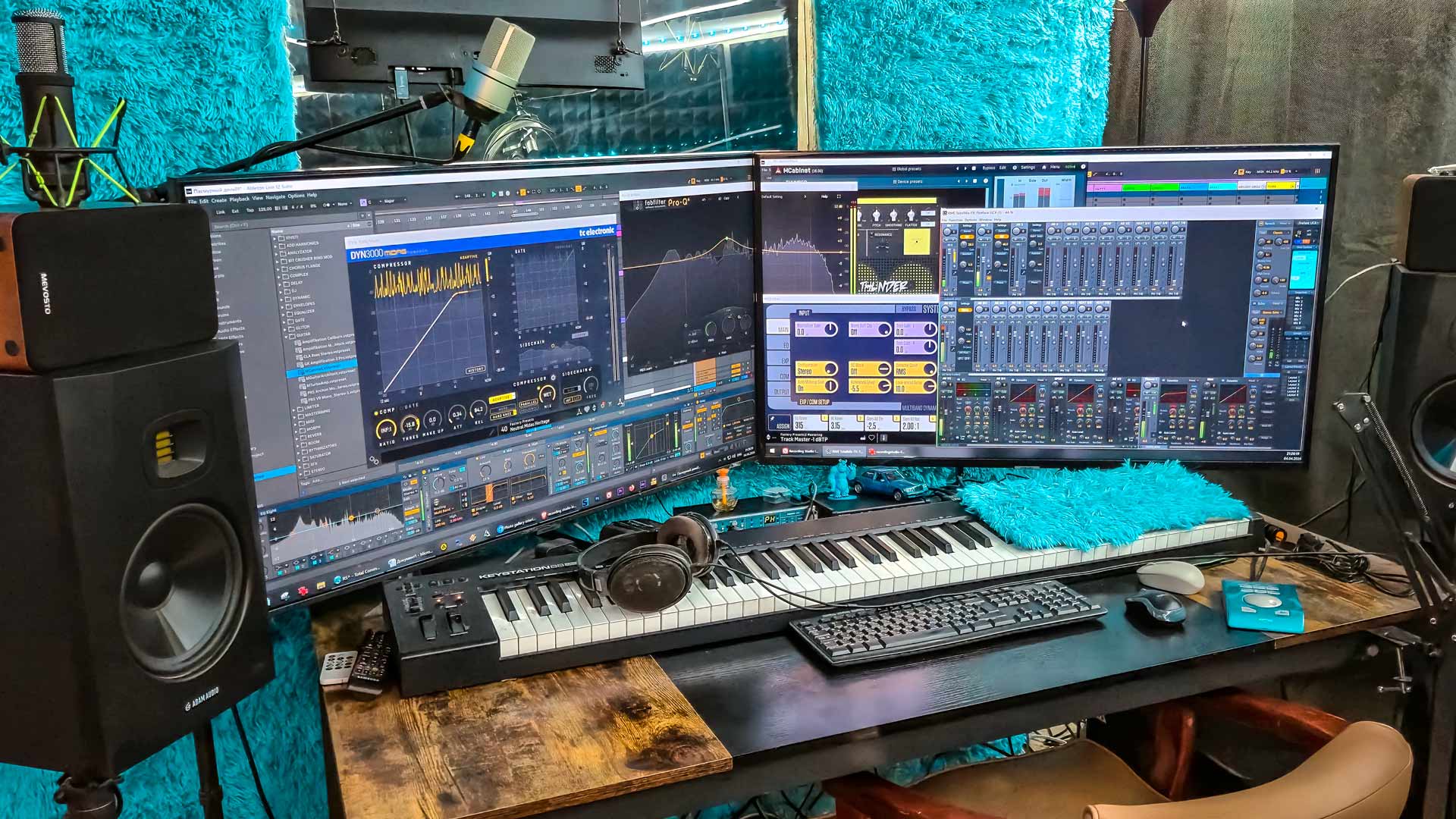
Violin was my first instrument in music school, so my relationship with it is personal.
One thing people say is absolutely true: violin develops the ear because there are no frets. Pitch lives entirely in your hearing and your hands.
But the most important thing about violin is something else.
Piano already has a prepared mechanism. You press the key, the hammer hits the string, and the mechanism does the rest. Violin is different. Violin forces the musician to create the sound almost completely by hand.
The violinist extracts the sound with both hands simultaneously. The right hand controls the bow, pressure, direction, attack, and movement. The left hand searches for pitch, vibrato, positions, intonation, articulation. Then there is pizzicato where the fingers themselves pull sound directly from the strings.
Nothing is prepared for you there.
Which is why violin in weak hands becomes a torture device. And in skilled hands — one of the most beautiful sounds in music.
Technique
My biggest marker of violin level is synchronization between the hands.
Notes must change at the exact moment the bow changes direction. Otherwise beginner artifacts appear immediately. The violin starts stumbling over itself.
And this synchronization is not only rhythmic. It is physical synchronization between both hands. The left hand and the bow must breathe together.
Violin exposes weak coordination mercilessly. The listener may not understand technically what is wrong, but the ear immediately feels discomfort.
Violin is very unforgiving that way. It leaves very little space to hide.
Breathing
There is a popular idea that violin sounds similar to the human voice because of frequencies or timbre. I do not think that is the main reason.
Violin feels human because it breathes.
The bow gives the violin breath. The bow has direction, pressure, attack, release, acceleration, slowing down. Just like breathing changes emotion in speech.
That is why violin can suddenly feel almost alive. Not because it literally copies the voice, but because the movement behind the sound feels biological.
Sometimes violin phrases feel less like notes and more like somebody trying to communicate emotionally without words.
Performance Problems
Violin has enormous expressive range. Which means if the violinist plays every phrase with the same pressure, same articulation, same emotional weight, the whole part dies immediately.
I am not even talking yet about obvious technical problems like false notes or unstable intonation. Even emotional sameness already kills violin.
Violin cannot survive emotional flatness. The entire point of the instrument is movement inside the phrase.
If every phrase has the same pressure and same emotional color, the violin starts sounding like one long nervous line dragged through the song.
Real Strings vs Libraries
This is exactly why convincing solo violin VST is so difficult.
There are too many things happening simultaneously: bow pressure, attacks, transitions, phrasing, vibrato, timing, articulation, emotional movement, dynamics. To automate all of that manually often becomes harder than simply recording a real violinist.
I have never used VST violins for exposed emotional solo violin parts. They start feeling synthetic very quickly.
But for string pads, orchestral backgrounds, cinematic textures, sustaining layers — VST strings can work beautifully. Same with pizzicato. Modern libraries handle those things very well.
But exposed emotional solo violin? That is where human instability suddenly becomes valuable.
Styles
I honestly enjoy many violin styles. Cinematic strings, orchestral writing, emotional violin, folk playing — all of that can be beautiful.
But some of my favorite violin energy comes from Irish dance music and the way it evolved into American country fiddle playing.
Maybe because there is positivity there. Motion. Life. Human joy instead of endless dramatic suffering.
Good country fiddle can suddenly lift the whole track into movement. The song starts smiling.
A Studio Story
One of the strangest violin sessions I remember started when a girl called asking whether I could record violin for her promo videos with violin covers.
I immediately started asking technical questions. Is it acoustic violin or electric violin? If electric — what connector should I prepare? If acoustic — I will prepare stereo microphones.
She said it was electric violin.
I asked for the brand and model so I could check the connector specifications. Then I searched online and discovered something strange: the violin basically did not exist outside cheap AliExpress listings for around forty-five dollars.
That already worried me.
The next day she arrived to record Vanessa Mae’s “Storm.”
Everything went wrong.
She played out of tune — and for the first time in my life I was tuning not vocals but violin notes manually instead of the player.
She played out of rhythm — so I moved notes in timing.
She could not properly execute the passages — and there I could do almost nothing, because the phrases collapsed into sticky musical knots.
But the most horrifying thing was the sound itself.
The bow was slipping and failing to properly grab the strings. Instead of a stable full string vibration, random ugly squeals appeared almost like accidental harmonics. The violin sounded like a teenager with a breaking voice trying to sing Mozart opera arias.
Then I suddenly remembered noticing something strange before recording even started: usually the fingerboard area under the bow has a noble white dust from rosin flying off the bow hair. Her violin was completely clean.
I asked:
“Did you rosin the bow?”
“Why?” she asked.
I asked if she even had rosin.
She proudly showed me a brand new unopened piece of rosin.
She also told me she had graduated from a local conservatory and worked in a philharmonic orchestra.
To this day I still do not understand how that combination of facts can exist inside one universe.
The Opposite Story
The opposite case happened when I needed violin for my daughter’s country-style arrangement.
We invited an older woman who had no formal education at all. She simply played country music with old guys in local pubs.
But she played so naturally, so confidently, and improvised parts so easily on the spot that her violin became one of the main decorations of the track.
Again the same lesson:
musician and diploma are not automatically the same thing.
Personal Relationship
There is something important about violin: it can become emotionally too sharp very easily.
Sometimes violin becomes nervous, almost hysterical, psychologically exhausting. Sometimes it sticks out of the arrangement like a nail in the spectrum.
But the strange thing is — that sharp emotional edge is also part of why violin works.
Modern resonance hunters with tools like Soothe often want to immediately cut everything that sticks out. But sometimes the whole soul of violin lives exactly in that dangerous emotional frequency area.
Not every sharp thing in music is a mistake.
And honestly, even though I deeply respect violin, for melodic emotional music I personally often gravitate more toward viola and especially cello. I absolutely love cello writing. In Georgy Sviridov’s “Snowstorm” overture the cello parts are pure magic to me. I also love Dvořák’s writing for cello.
Cello has the same emotional depth but with a warmer, calmer center of gravity.
But violin has something cello does not: danger. A certain unstable human nervousness. And maybe that is exactly why violin can cut through music so powerfully when used correctly.
Emotion
When I hear truly good violin playing, it feels almost like the violin is telling me something.
Like a cat.
It purrs, reacts, growls, meows emotionally. You do not fully understand the literal meaning, but you clearly feel communication happening.
Good violin is not only melody. It is emotional behavior.
Street Musicians
Interestingly, almost every street violinist I encountered played not just acceptably, but professionally. You could immediately feel experience and maturity in the sound.
Violin is difficult enough that weak players usually cannot survive publicly with it for very long.
Advice
My main advice is simple:
prepare, know, and feel your instrument.
Violin does not forgive carelessness very well. It immediately exposes weak hands, weak synchronization, weak intonation, weak listening, weak bow control.
But if the musician truly controls the violin, the instrument becomes one of the most emotional and human sounds in music.
Just please — do not turn every violin part into another dramatic TikTok nervous breakdown floating in giant reverb.
Instrument Recording Cluster
Every instrument has its own psychology. Guitar pushes energy. Piano builds structure. Violin exposes the nervous system.