Vocal Recording & Production
Most people think “professional vocals” come from expensive microphones, expensive plugins, tuning, presets, secret chains, or magic mastering. But usually the problem appears much earlier. The vocal simply does not feel controlled, free, emotionally alive, rhythmically stable, or finished as a performance.
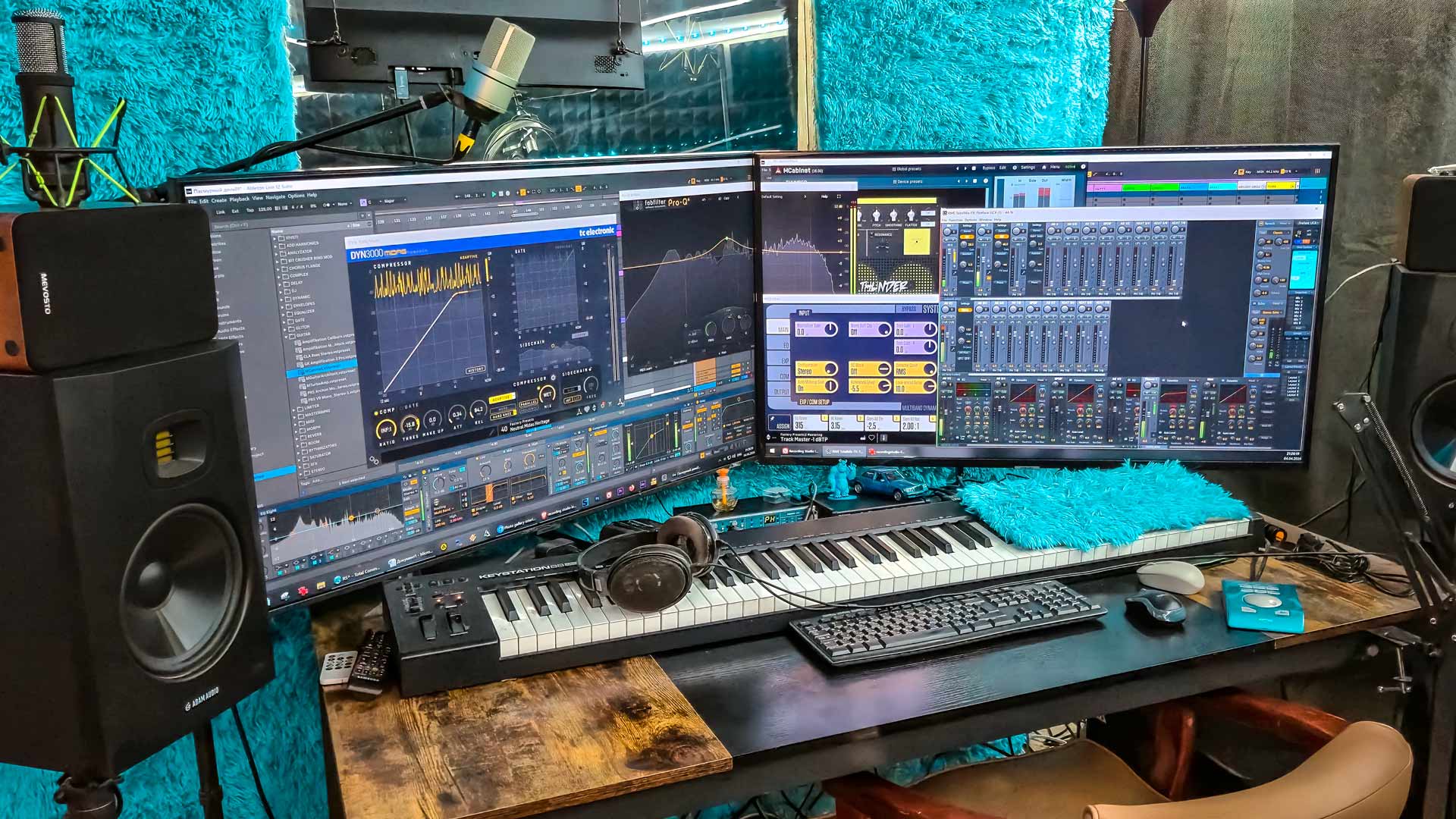
At Ronter Sound, work inside our recording studio in Philadelphia starts before plugins. If the artist already did everything possible at the microphone, then the rest becomes my job as an engineer.
Professional Vocal Presence
Tiny timing imperfections sound alive. Humans are not robots. Small fluctuations create movement and realism. But once those timing problems cross a certain line, the vocal immediately starts sounding childish and amateur.
The difficult part is that there is no exact formula. The line between natural movement and sloppy instability is determined mostly by ear, taste, style, and musical context.
Dry vs Raw
People constantly confuse dry vocals with raw vocals. They are not the same thing at all.
A raw vocal is simply an untreated source recording. No serious dynamic control, no balancing, no shaping, no integration into the arrangement. Just the naked recording itself. Nobody seriously listens to completely raw vocals as a finished result.
But dry vocals are different. Dry vocals can sound extremely stylish, modern, expensive, and professional. In fact, dry vocals are often the safest harbor for beginners because they avoid drowning the song in huge reverbs, endless tails, phase problems, and effect soup.
A controlled dry vocal sitting cleanly in front of the arrangement often sounds far more expensive than a vocal buried under twenty plugins trying desperately to sound “professional.”
Minimalism sounds expensive when the vocal itself already carries emotion, timing, articulation, and control naturally. Otherwise the dryness simply exposes weakness instead of style.
The War Against Resonances
One of the strangest modern trends is people aggressively fighting resonances everywhere. Huge amounts of modern processing revolve around suppressing body movement, vocal peaks, resonant behavior, and natural energy.
But vocals literally sing notes through resonating cavities inside the human body. Notes themselves are resonances. Music itself is resonances.
So the situation becomes absurd: people are basically fighting the music itself in pursuit of prettier spectrums.
The stronger and more emotional the vocal becomes, the more the human body naturally resonates. Then the “resonance fighters” immediately attack those frequencies with tools designed to flatten everything into sterile smoothness.
The result often becomes technically clean but emotionally dead.
This is one of the biggest reasons modern vocals sometimes sound polished yet strangely lifeless — the exact emotional emptiness discussed further in why mixes sound flat .
The Pitch Trap
Beginners often become obsessed with perfect notes. They tense up the entire body trying to hit every pitch perfectly, then force heavy autotune on top of already overcontrolled vocals.
But notes are usually the last bastion after much more important battles are already won:
A perfectly tuned vocal can still sound boring, stiff, and emotionally empty if the person never actually said anything through the performance.
Notes are important, but only after the vocal already feels alive. Many singers chase pitch while completely forgetting about emotional communication.
That emotional emptiness is also one of the core reasons vocals sound thin even when they are technically “correct.”
Freedom Matters More
Beautiful timbre is partly a gift. Some people are naturally lucky. Others are not. But freedom of delivery affects everybody.
A singer trying too hard to sound “correct” usually becomes stiff, cautious, overcontrolled, and emotionally trapped. Meanwhile, a freer singer with imperfect technique can still sound far more convincing and professional because the listener feels a real person behind the voice.
Do not think about sounding “dry” or “wet” while recording. Forget those words completely at the microphone. Open up, relax, and sing freely. You can think about post-production later.
A free voice almost always reads as more emotionally expensive than a trapped voice hiding behind technical perfection.
Whisper Vocals
Billie Eilish is a perfect example of modern controlled minimalism. She often sings extremely quietly, almost whispering. But the important part is that she actually knows how to sing properly with support, power, control, and emotional precision underneath that softness.
The whisper becomes expressive because it is a deliberate artistic choice, not a limitation.
The problem starts when inexperienced singers hear those records and decide that whispering itself automatically equals vocal artistry. Suddenly people who can only whisper start calling themselves singers.
Minimalism sounds expensive only when there is real control hiding underneath it.
Quiet vocals are difficult precisely because they expose everything: breathing, articulation, timing, emotional truth, and control. Minimalism is merciless toward weak performers.
Finished Vocals
Truly professional vocals often already sound convincing before heavy processing even begins. The artist comes prepared, rhythmically controlled, emotionally flexible, dynamically aware, and capable of changing energy together with the music and lyrics.
That level of expression usually belongs either to talented people or to artists who worked for years developing those abilities.
Once the artist has already done everything possible at the microphone, then the rest becomes my responsibility as the engineer.
A truly professional vocal usually already sounds emotionally believable before the expensive plugins even load.
When the recording itself already feels emotionally unfinished, the mix later often struggles with the exact problems discussed in why vocals don’t sit naturally in the mix .
Related Vocal Topics
Professional vocal presence usually depends on delivery, rhythm, emotional movement, articulation, dynamic control, arrangement balance, and freedom of expression far more than expensive plugins alone.
Related studio services include vocal production, vocal editing & cleanup, mixing & mastering, and voice and vocal recording.
Recording Help
If your vocals sound dry, weak, empty, flat, or unprofessional, the solution is not automatically more effects, more autotune, more saturation, or more expensive equipment.
Very often the real difference comes from rhythm, delivery, freedom, articulation, emotional movement, preparation, and understanding what the vocal is actually supposed to communicate.
At Ronter Sound, the goal is helping artists create performances that already feel emotionally alive before the heavy processing stage even begins.