Human Voice & Psychology
For many people, hearing their own recorded voice is not just a technical surprise. It can feel like meeting a stranger who somehow has your face, your words, and your songs — but not the voice you expected to hear.
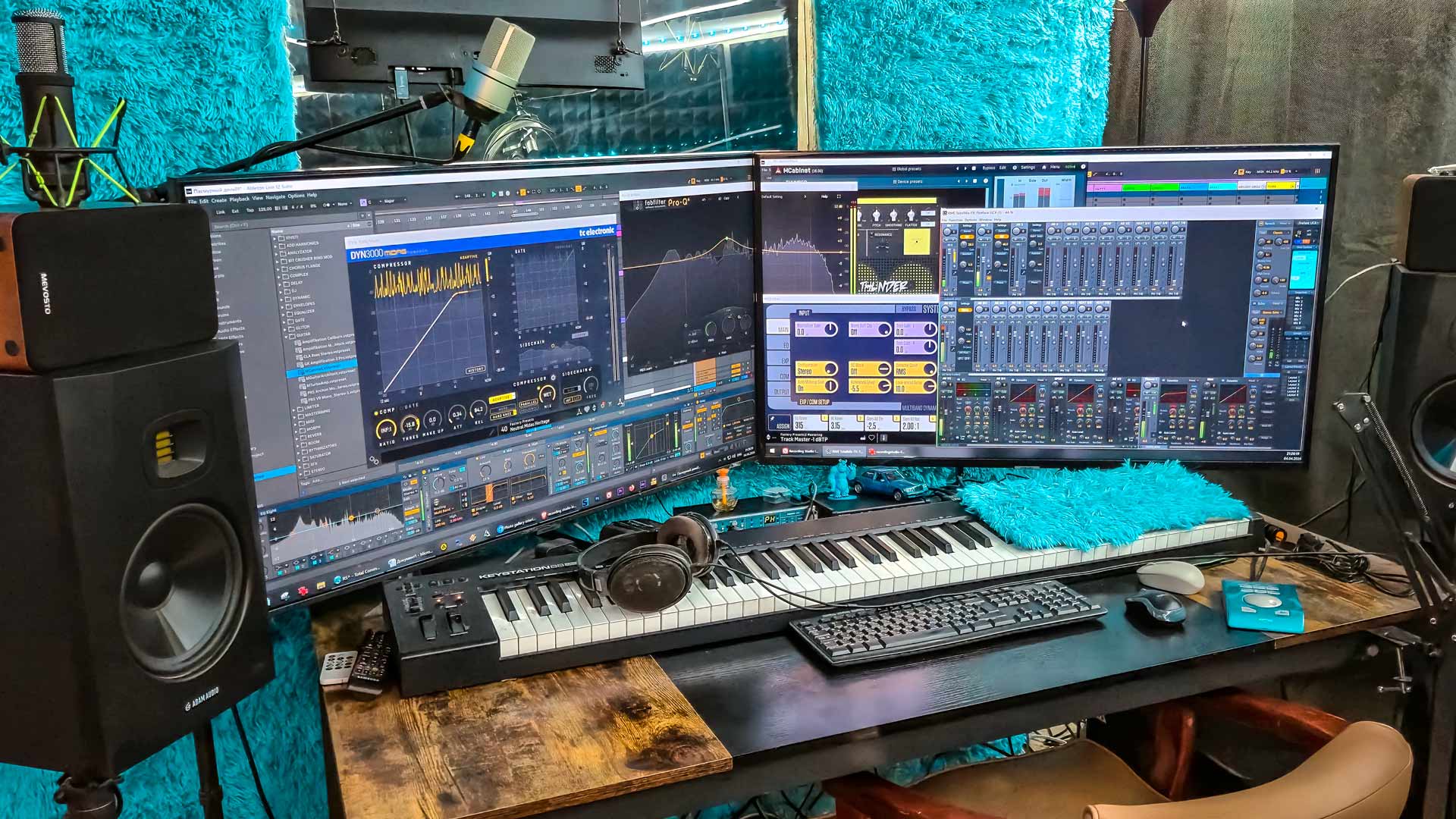
At Ronter Sound, vocal recording inside our recording studio in Philadelphia is not only about microphones and sound quality. It is also about helping artists face their real recorded voice, understand it, improve it, and eventually stop fighting it.
Voice Perception
A person does not hear their own voice the same way everyone else hears it. Inside the head, the voice is mixed with internal resonance, body vibration, habit, memory, and self-image. A studio microphone removes that private illusion and gives back something more external, more accurate, and sometimes emotionally difficult.
This first shock often overlaps with the exact problems discussed in why vocals sound thin because many singers suddenly realize their voice carries far less emotional density and body than they imagined internally.
The First Shock
When someone hears their recorded voice and says, “That sounds bad,” very often the first problem is not even quality. The first problem is difference. The voice is simply not the voice they expected.
We live for years with an internal version of our voice. It becomes familiar not because it is objectively better, but because it feels like “me.” Then the recording plays back, and suddenly the person hears diction, age, breath, tension, tone, phrasing, and habits from the outside.
That moment can be uncomfortable. It can feel unfair. But it is also the beginning of real vocal work.
A Real Studio Story
I once worked with an older singer who came to record a large project — about twenty songs. His original mission was beautiful: he wanted to preserve and share old songs that many people had forgotten. He had performed them for years in casual places, including tavern-style settings, where people knew him, liked him, supported him, and often praised his singing.
But the way he was used to hearing himself was not neutral. He often heard his voice through a small Bluetooth microphone and speaker, with all the distortion, compression, and chaos that such a setup can create. He also heard himself inside the atmosphere of performance: people around him, familiar songs, live energy, encouragement, and the emotional context of the room.
Then he came into the studio and heard his voice captured clearly by a professional condenser microphone. The recording was not hiding the details. It was showing them. And what he heard was painful for him: not the imagined voice from memory, not the praised live persona, but the real voice of an elderly man, with all the natural traces of age, diction, breath, and vocal condition.
This was not a failure of the microphone. It was a collision between self-image and recorded reality.
The hardest part was not technical. The hardest part was psychological acceptance. The recording was not inventing a fake voice. It was removing the comforting illusions the singer had built around himself for years.
Searching for the Reason
His first explanation was the vocal room. He felt the room was making the voice strange, too dry, too unfamiliar, not like what he knew from live performance. This reaction is understandable. A treated vocal room removes many reflections that people are used to hearing around themselves.
So we tried recording outside the vocal booth, in another space. But the voice remained the same voice. The room changed, but the person did not become someone else.
This is often the first lesson: the room can affect sound, but it cannot return the imaginary version of the voice that existed only in a person’s internal hearing.
The same confusion often appears when singers hear muddy, boxy, or nasal vocals and immediately assume the room itself created an entirely different person.
Then the Microphone Was Blamed
When the room was no longer the answer, the next suspicion was the studio microphone. Maybe it was too professional. Maybe it captured the wrong thing. Maybe it did not understand his voice the way his usual performance setup did.
To test that, we tried a different type of microphone — a dynamic microphone held in the hand, closer to the kind of live situation he knew. But again, the same voice came back. Different microphone, different texture, same person.
A microphone can color the voice. It can make it brighter, darker, closer, rougher, smoother, or more intimate. But it cannot make a person twenty years younger, remove vocal habits that exist in the body, or replace real delivery with remembered identity.
Some people also panic because the microphone suddenly exposes harshness, tension, breath pressure, or articulation problems they never noticed before. Those issues are explored further in fix harsh vocals .
Then the Old Setup Was Tested
Then came another thought: maybe only his usual Bluetooth microphone and speaker could capture the “real” version of him. So we tried that too.
But instead of solving the problem, it added new problems on top of the original voice. The vocal limitations were still there, but now they were covered with the distorted, compressed, unclear sound of the device he had grown used to.
This is a very important point. Sometimes people do not actually prefer a more accurate version of their voice. They prefer the version they have emotionally adapted to, even if it is technically worse.
Then Came the Phone Recording
After that, he remembered that someone had once recorded him on a phone years earlier, and that people liked the result. So we tried a phone recording too.
But a phone also could not change the basic reality. It simply captured the same person with lower quality and less control.
Then the explanation shifted again: maybe the problem was that the studio process was too professional. Maybe a “normal person” recording casually would somehow make it sound like it did many years ago.
And there was the most painful part: many years ago, the voice itself was younger. The body had changed. The self-image had not fully accepted that change yet.
The Hard Truth
For everyone else in the room, the situation was clear. Whether he sang without a microphone, into a studio microphone, into a dynamic microphone, into a phone, or through a Bluetooth speaker, the core voice was still recognizable as the same voice.
The painful difference existed mostly between the voice he expected from inside himself and the voice the outside world was hearing.
That does not make the pain fake. It was real. But the solution could not come from blaming every microphone. The only way forward would have been to accept the real instrument and then work with it honestly.
What This Teaches
This story is not about mocking a singer. It is about how difficult it can be to hear yourself clearly. Almost everyone goes through a smaller version of this. They hear the recording and immediately want to escape from it: wrong mic, wrong room, wrong engineer, wrong headphones, wrong day.
Sometimes there really are technical problems. But sometimes the recording is simply showing something true. If you run away immediately, you never get to the useful part: learning what your voice actually does, where it is strong, where it needs work, and how to use it better.
The worst strategy is to search endlessly for a device that flatters the illusion instead of learning how to control the real voice.
Bad or Just Unfamiliar?
Sometimes a recorded voice genuinely reveals problems: tension, weak diction, unstable breath, unclear tone, forced high notes, bad habits, or lack of vocal control. But you cannot improve these things without first listening honestly.
Other times, the voice is not bad at all. It is simply unfamiliar. The person expected one sound and received another. After a few sessions, the shock often becomes smaller. The artist stops reacting to the strangeness and starts working.
This is when recording becomes productive. The voice stops being an enemy and becomes an instrument.
Sometimes that process also reveals why the vocal previously never sat naturally inside the mix because the artist was still fighting their own voice instead of controlling it.
Do Not Force a Fake Voice
Many singers react to discomfort by trying to become someone else. They copy another artist, force a different placement, sing in an unnatural tessitura, darken or brighten the tone artificially, or change the voice so much that the body begins to resist.
Influence can be useful. Many artists find themselves partly through other artists. But copying becomes dangerous when it creates tension, stiffness, and a voice that cannot move freely.
A forced voice usually fails because it does not belong naturally to the person producing it.
This is exactly how emotionally disconnected vocals are born — technically “correct,” but psychologically trapped. Over time that often turns into vocals that sound sterile and unprofessional emotionally .
The Way Forward
The recorded voice usually becomes easier to accept through work, not denial. After several songs, many artists begin to understand what their voice really is. They hear their habits. They recognize their strengths. They stop panicking at the sound of themselves.
Then the real work begins: breathing, phrasing, articulation, emotional delivery, rhythm, confidence, and freedom of sound production.
A voice becomes more beautiful when the person stops strangling it with fear, imitation, or shame.
Memorable Voices
A technically perfect voice is not automatically interesting. Some imperfect voices stay in memory forever because the artist had something to say and found a way to say it honestly.
Listeners respond to meaning, personality, phrasing, emotion, timing, and truth. A beautiful timbre helps, but without freedom and intention it can still feel empty.
The goal is not to erase the real voice. The goal is to understand it well enough that it can finally speak through music.
Related Voice & Recording Topics
Recorded voice discomfort often connects to confidence, vocal control, emotional delivery, and the difference between hearing yourself internally and hearing yourself as others do.
Related studio services include voice and vocal recording, vocal production, song demo production, and vocal editing and cleanup.
Recording Help
If your recorded voice sounds strange, disappointing, or unfamiliar, do not rush to hate it. Listen again. Work with it. Let the first shock pass. Very often, what feels uncomfortable at the beginning becomes the exact instrument you later learn to control.
At Ronter Sound, the goal is not to replace your voice with an artificial mask. The goal is to help you hear your real voice clearly, accept it, improve it, and use it honestly in music.