Beginner Recording Studio Guide
Your first time in a recording studio is usually much more psychological than technical. People rarely walk into a studio worrying about compressors, plugins, or sample rates. They worry about themselves.
After decades inside music and recording studios, I can honestly say: almost everybody feels something like this during their first real studio session.
And honestly?
That fear is normal.
At Ronter Sound Recording Studio Philadelphia, I do not treat beginners like “people who know nothing.”
I treat them like future artists standing at the very beginning of their path.
If you are already thinking about recording your own material, continue here too: Recording Your First Song .
The First Reaction
I can only speak for my own studio. I do not know what happens in every other studio on Earth. I only know what I personally see again and again inside my room.
Usually the very first reaction beginners have is not fear.
It is awe.
Genuine childlike awe.
“WOW… everything here is real…”
“This is so cozy…”
“This is so professional…”
“I always dreamed about being in a place like this…”
And I completely understand that feeling because I originally came into studios myself not as an engineer, but as a musician.
So every time I see those reactions, I relive part of that excitement together with the person.
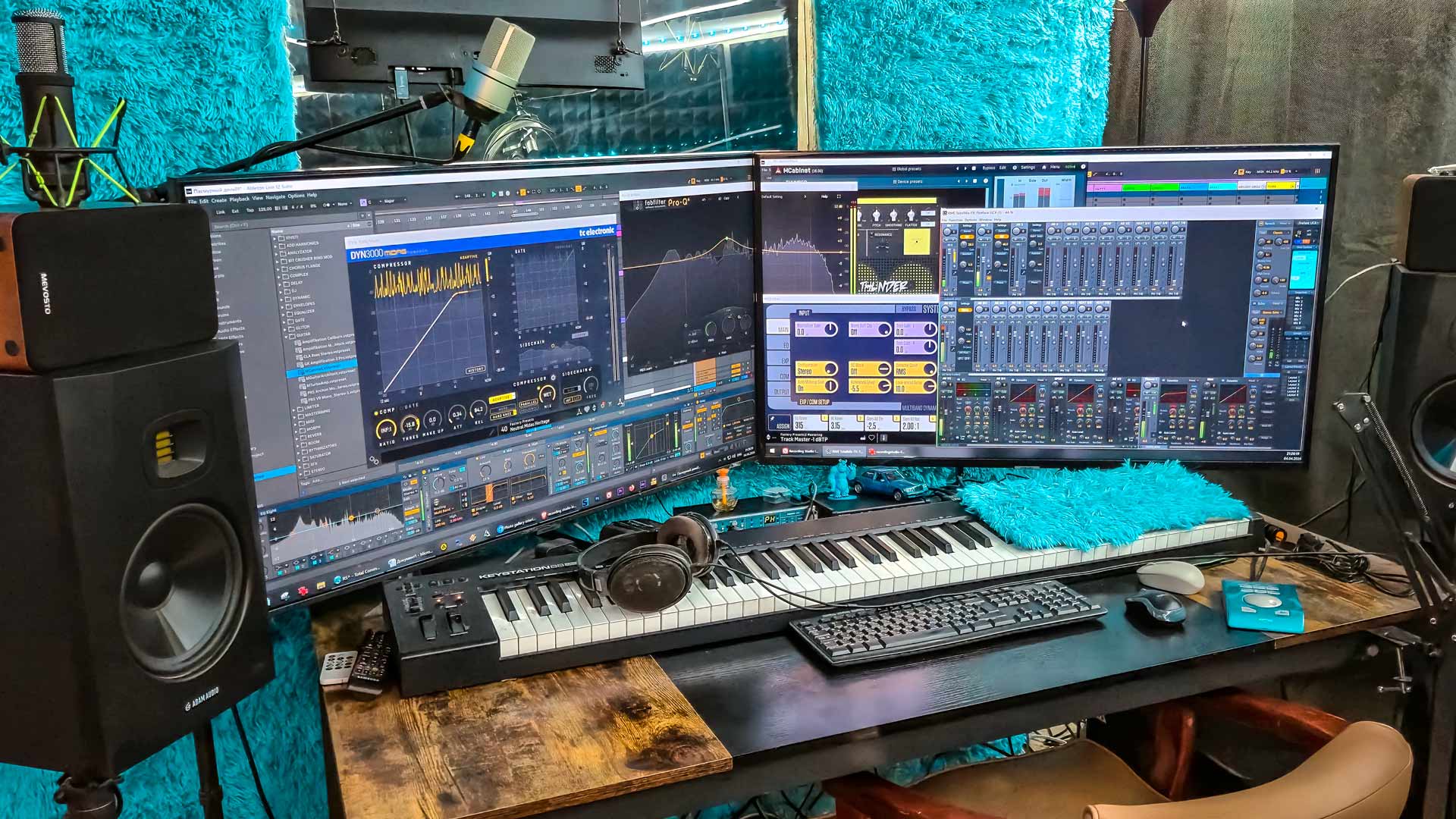
Studio Myths
In Russia we have a funny phrase: “Лох цепенеет.”
Meaning: an inexperienced beginner falls into a hypnotic religious trance just from seeing beautiful studio objects and starts believing that visual stereotypes are the essence of a real studio.
Giant analog consoles.
Endless glowing hardware.
Expensive racks.
Mandatory “warm tube” boxes.
A mountain of mysterious knobs and blinking lights.
And suddenly the person starts believing: THIS is what creates music.
Honestly?
I owned plenty of those elegant analog dinosaurs myself over the years.
But decades of work taught me something important:
the studio should not be a fake elite spaceship where beginners freeze from anxiety and worship expensive boxes.
The studio itself should feel calm, creative, comfortable, and human.
Today the real studio mostly lives inside:
Not inside giant walls of intimidating equipment pretending to look “elite.”
The Second Shock
One of my favorite moments always comes a few minutes later.
Many beginners initially do not even realize there is a separate vocal room.
They see the talkback microphone near my engineer desk and honestly think:
“Wait… I sing right here next to you?”
Then I open the booth door.
And suddenly the entire experience becomes real.
The excitement explodes all over again.
Honestly, I genuinely love those moments.
I built this place so people would feel inspired to create, not intimidated like they accidentally walked into a museum where they are not allowed to touch anything.
The Human Side
Some beginners laugh too much.
Some barely speak.
Some suddenly become extremely serious.
Some try very hard to look “professional.”
Honestly, that last one is especially funny sometimes.
A person watched too many TikToks and YouTube producer videos and suddenly arrives trying to behave like a hardened superstar:
But the beautiful thing is: all of that usually disappears very quickly.
Because real studio work brutally cures fake fantasies.
Not in a cruel way.
In an honest way.
The studio does not need to humiliate anyone. Reality does the educational work by itself.
Suddenly:
The studio does not destroy the person.
It destroys illusions.
This becomes painfully obvious during: What Happens During a Recording Session .
The Fear Usually Dies Fast
Usually after a few test takes something changes.
The artist suddenly realizes:
We are simply trying to make the song better together.
And then something very important happens:
the person slowly stops defending themselves.
They stop trying to “look like an artist.”
And they begin becoming one.
This psychological barrier is discussed deeper here: Recording Studio for Non-Professional Singers .
Engineer As Collaborator
I am not a “button pusher” silently pressing Record and collecting files like a bored office clerk.
I am:
I write my own music.
Record myself.
Perform live.
Produce my own children.
Who better to help musicians than another musician?
Sometimes I adapt completely to the person’s emotional tempo.
Sometimes the session needs:
Sometimes I stop the recording because the artist emotionally locked up.
Sometimes I absolutely do NOT stop recording because I hear the person finally opening emotionally for the first time.
Sometimes the best take happens accidentally: after laughter, after frustration, after a mistake, after the artist already gave up trying to sound “perfect.”
That is when real humanity suddenly appears in the vocal.
This entire process is described deeper here: What Happens During a Recording Session .
Who Actually Comes To Studios
Over the years, completely different kinds of people came into my studio:
Honestly I think I understand why truck drivers appear so often.
Imagine driving alone for endless hours through the night.
Of course many of them start singing songs to themselves.
Some even begin inventing songs while driving.
What separated beginners from professionals was usually not “talent.”
Mostly:
Some beginners honestly sang BETTER than certain “real musicians.”
And I am sitting there thinking: why are you a plumber, a truck driver, or an office manager instead of already standing on a stage somewhere?
This connects directly with: Recording Studio for Non-Professional Singers .
Reality Can Hurt
One older artist came wanting to preserve old songs he loved.
But for years he only heard himself:
Then for the first time he heard himself through a highly accurate studio condenser microphone.
And suddenly he heard: not the younger version of himself inside his head — but an 80-year-old man.
It psychologically devastated him.
He blamed: the room, the microphone, the acoustics, the studio.
But the microphone was simply honest.
I described that experience in much more detail here: Why My Voice Sounds Bad Recorded .
The Internet Lied To Beginners
Social media created an entire fake mythology around music production:
But real studio work is slower.
More human.
More vulnerable.
More difficult.
More honest.
Real music is not: posing, fake confidence, studio aesthetics, or pretending to be famous already.
Real music is:
The fake online music world sells shortcuts.
The studio shows very quickly whether there is actual music behind the pose.
The real mechanics behind studio work are explained here: What Happens During a Recording Session .
You Already Started
If you are afraid:
“What if I’m talentless?”
Then listen carefully:
If you already created:
then you are already a creator.
Maybe inexperienced?
Of course.
But everybody starts inexperienced.
As we say in Russia:
“Water does not flow under a lying stone.”
Meaning: if you never move — nothing ever begins.
Artist Philosophy
One of the biggest beginner mistakes is thinking they must somehow earn the right to create music only after becoming technically perfect.
But music was never only for perfect singers, perfect engineers, or polished industry mannequins.
Music belongs to people who have something human to express.
I wrote much more deeply about this philosophy here: Musician Manifesto .
What Actually Makes a First Session Successful
A successful first recording session is not:
If you need a practical preparation checklist, I explained that separately here: how to prepare for vocal recording.
The real success happens when the artist suddenly forgets they are “a beginner.”
They stop:
And finally begin:
Technically everything in my studio is already under control.
The real variable is always the human side of creativity.
Continue the beginner guide here: Recording Your First Song , What Happens During a Recording Session , and Recording Studio for Non-Professional Singers .