Audio Content Recording Services
Dubbing is not simply reading translated words into a microphone. Good dubbing means taking a video, understanding what is happening on screen, translating or adapting the message, choosing the right voice, recording the performance, and making that new voice feel like it belongs to the content.
At Ronter Sound Recording Studio Philadelphia, we can help with dubbing services in Philadelphia for informational videos, presentations, commercials, educational content, social media videos, creative projects, business media, and other video or audio content that needs a new spoken voice in another language or another performance style.
This can include translation, voice recording, voice acting, timing, delivery, character, and the technical work needed to make the dubbed version sound clean, professional, and useful for the final project.
Video Dubbing
Dubbing services are needed when the original voice in a video is replaced or recreated with another voice.
Sometimes this means another language. For example, an English video needs to be dubbed in Spanish, Russian, Ukrainian, Portuguese, French, German, Arabic, Chinese, or another language.
Sometimes this means the same language, but another performance. Maybe the original voice is not good enough. Maybe the speech is unclear. Maybe the delivery is weak. Maybe the video needs a stronger commercial, professional, emotional, or character-based voice.
In both cases, dubbing is not just “voice replacement.” It is production work. The new voice has to serve the video, the message, the audience, the timing, and the purpose of the content.
ADR vs Dubbing
It is important to separate dubbing from ADR.
ADR usually means that the original actor re-records dialogue for film, video, or a scene where the original sound was not good enough. The actor often repeats their own performance, trying to match the original timing and lips.
Dubbing is a little different.
Dubbing often means another language, another voice actor, translation, adaptation, and recreation of the spoken performance for a new audience.
ADR is often about replacing bad production dialogue with cleaner dialogue from the same actor.
Dubbing is often about giving the whole video a new spoken version so people in another language, another market, or another context can understand it.
Both require timing and attention. But the purpose is not always the same.
Language Dubbing
One of the most important parts of language dubbing is the human voice.
Artificial voices may be useful in some situations, but when the project needs life, emotion, trust, acting, commercial energy, or natural human delivery, live voice recording still matters.
Depending on the project and available voice talent, dubbing can be recorded in many languages, including English, Spanish, Russian, Ukrainian, Portuguese, French, German, Italian, Polish, Turkish, Arabic, Hebrew, Chinese, Mandarin, Cantonese, Japanese, Korean, Hindi, Urdu, Bengali, Vietnamese, Thai, Greek, Romanian, Albanian, Serbian, Croatian, Czech, Dutch, Swedish, and other languages.
The language is not just a set of translated words. Every language has its own rhythm, breath, musicality, phrasing, emotional habits, and natural speed.
That is why multilingual dubbing should not sound like a person is mechanically reading a translation. It should sound like a real person speaking naturally to the audience in that language.
Translation and Acting
A direct translation is not always enough for dubbing.
Sometimes the phrase becomes too long. Sometimes it becomes too short. Sometimes it technically means the same thing, but emotionally sounds wrong. Sometimes the translated phrase does not fit the video timing. Sometimes it does not fit the character.
That is why dubbing often needs adaptation.
The meaning should remain. The intention should remain. But the spoken phrase should work in the new language, with the new voice, inside the video.
And then comes acting.
A commercial needs one kind of delivery. A training video needs another. A presentation needs another. A character in a creative video needs another. A narrator needs another. A funny social clip needs another.
The voice must not only pronounce the words. It must play the function of the words.
Timing
In video dubbing, timing is not a small technical detail.
The voice has to live with the picture.
If the phrase starts too late, the viewer feels it. If it ends too late, the next scene may already begin. If the delivery is too slow, the video becomes heavy. If it is too fast, the speech becomes unnatural.
For some projects, we simply need the dubbed voice to fit the scene and the general timing.
For other projects, we need closer synchronization with the person on screen.
And for some videos, especially when the speaker is visible, we may need lip sync or near-lip-sync work, where the voice actor watches the video and tries to match the timing, pauses, phrase length, and mouth movement as closely as the project requires.
Informational Content
Dubbing is often needed for informational content.
This can include training videos, tutorials, instructions, public information, medical or technical explanations, school or course materials, company onboarding videos, product explanations, museum audio, documentaries, and educational media.
In this kind of work, the main task is clarity.
The viewer must understand the message. The voice should not distract. The translation should not confuse. The delivery should be calm enough, clear enough, and professional enough for the information to be trusted.
If informational dubbing is done poorly, the content feels cheap and difficult to follow.
If it is done well, the viewer simply receives the information naturally in their language.
Presentations
Corporate dubbing has its own character.
A business presentation, company video, investor explanation, internal training, product demonstration, corporate announcement, or brand video needs a voice that sounds professional and reliable.
This is not always theatrical acting. Sometimes it is clean, confident, controlled speech. Sometimes it is friendly and human. Sometimes it is more official. Sometimes it is commercial and persuasive.
The voice should fit the company, the audience, and the purpose.
If the dubbed version sounds careless, the whole brand looks careless.
That is why corporate voice dubbing should be treated seriously, even when the video itself seems simple.
Commercial Content
Commercial dubbing is not only about understanding the words.
It is about selling the message.
A commercial voice may need energy, friendliness, authority, humor, urgency, elegance, trust, or emotional warmth. The same product can sound completely different depending on the voice and delivery.
For advertising videos, social media ads, web commercials, product videos, service explanations, and promotional content, the dubbed voice must support the commercial goal of the video.
It should not sound like a flat translation.
It should sound like a real commercial performance in the target language.
Creative Projects
Creative dubbing is different again.
A short film, animation, YouTube story, character video, comedy sketch, artistic project, social video, or creative campaign may need more than clean narration.
It may need character.
Who is speaking? What do they want? Are they serious, funny, tired, arrogant, emotional, innocent, aggressive, nervous, warm, cold, dramatic, or ironic?
Voice acting matters here.
The performer must not only speak the translated text. They must carry the same function, the same situation, and the same emotional role that the video needs.
Workflow
A dubbing session usually begins with the material.
We need the video, the original audio, the script, the translated or adapted text if it already exists, and the technical requirements. We need to understand the language, the voice type, the character, the audience, the timing, and the final purpose of the project.
Then the voice actor records the lines.
If the video requires timing, the actor can watch the picture while recording. If the project requires lip sync, we record more carefully around the mouth movement, pauses, and phrase length.
During the session, I listen not only to the sound quality, but to whether the new voice fits the video.
Is the timing good? Is the phrase too long? Is the delivery believable? Does the actor sound natural in the target language? Does the voice match the project? Does the content still make sense?
This is the real work of dubbing.
Studio Setup
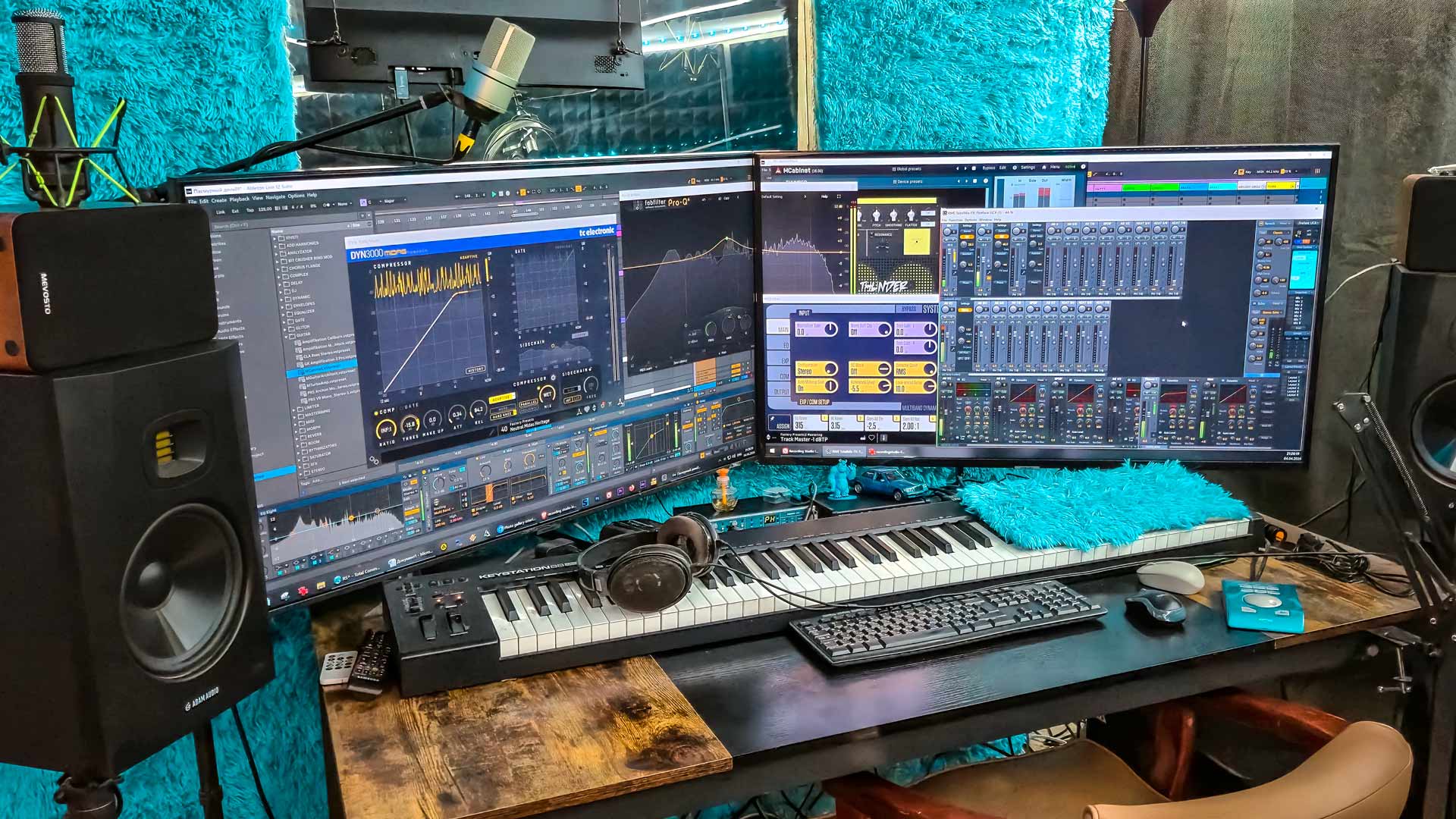
My studio is prepared for video-based voice recording and dubbing work.
The voice actor can record in the vocal booth while watching the video on a monitor. In the control room, I see the same video and listen to the recorded voice at the same time.
This allows us to work with timing, video reference, phrase placement, and synchronization much more comfortably.
If a phrase does not fit, we record another take. If the delivery is not right, we change it. If the timing is too loose, we adjust. If the new voice does not feel connected to the video, we search for a better version.
A dubbing studio should not only capture the voice. It should help the voice belong to the video.
Human Voice
A live human voice brings things that are difficult to replace.
Breath. Intention. Character. Reaction. Natural rhythm. Emotional pressure. A tiny smile in the phrase. A pause before an important word. A little hesitation. Confidence. Warmth. Authority.
In informational content, this makes the material easier to listen to.
In commercial content, this makes the message more persuasive.
In creative content, this makes the character more alive.
Good dubbing is not just sound. It is communication.
Ronter Sound
If you need dubbing services in Philadelphia for a video, presentation, commercial, creative project, training material, explainer video, social media content, YouTube content, documentary, or corporate media, we can help record the voice professionally.
We can work with translated scripts, adapted text, live human voice actors, multilingual voice talent, narration, character performance, commercial delivery, timing, and video-based recording.
The goal is simple: the new voice should not feel like a cheap layer pasted on top of the video. It should feel like a natural version of the content for the audience that needs to hear it.
Bring your video, script, translation, reference, or technical assignment. We will listen, understand the project, record the voice, monitor the timing, and help create a clean, professional dubbed version.
Audio Content Recording Services