Inside a Recording Studio Session
Many beginner artists think the goal of recording a song is to enter the vocal booth and sing one perfect take from beginning to end. And if that one perfect take does not happen, they feel like something went wrong.
At Ronter Sound Recording Studio Philadelphia, I see this differently. Professional recording does not always mean one mythical perfect take. Very often, after the vocalist records several takes, another important stage begins: vocal comping.
Vocal comping is the process of listening to several recorded takes, choosing the strongest moments, and assembling them into one main vocal performance. Not tuning yet. Not mixing yet. Not effects yet. First we decide what performance will actually become the lead vocal of the song.
Comping
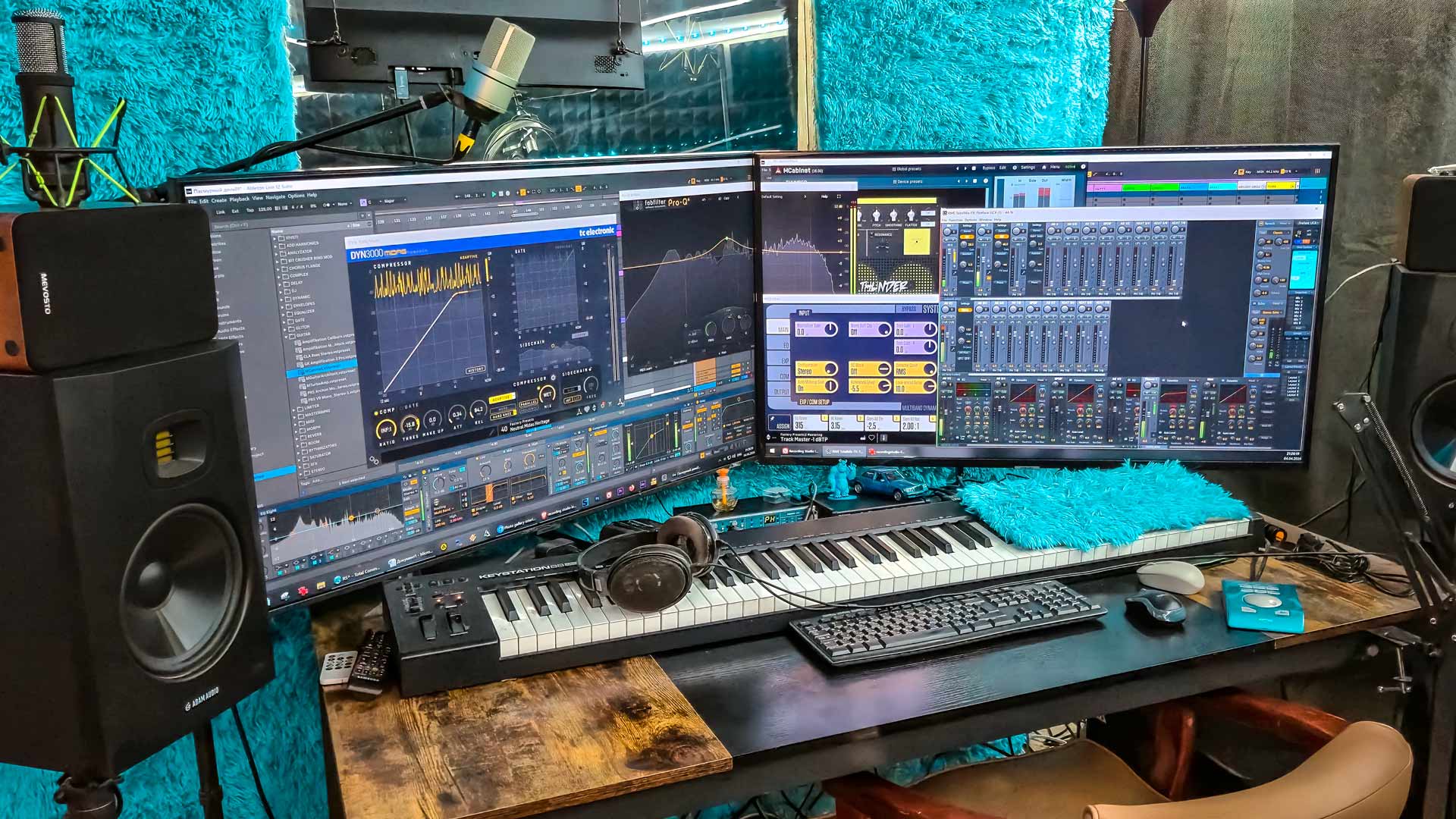
Let us say we recorded a verse five times.
In the first take, maybe the beginning is very alive. In the second take, the middle phrase is cleaner. In the third take, one emotional word suddenly hits exactly right. In the fourth take, the rhythm is better. In the fifth take, the ending has the confidence we were looking for.
None of these takes may be perfect from beginning to end.
But inside those takes, there may already be a very good vocal.
Comping is the work of finding that vocal inside the recorded material and carefully assembling it into one main performance.
This is not random cutting. This is not mechanical editing. This is listening, choosing, comparing, and understanding what the song actually needs.
Multiple Takes
Some artists think that if we record several takes, it means they failed.
No.
Recording several takes is normal studio work.
A human voice is not a printer. It does not produce identical copies. Every take is slightly different. The body is different. The breath is different. The confidence is different. The emotion is different. The attack of the words is different. The relationship with the microphone is different.
In one take, the vocalist may give the best emotion. In another, better pitch. In another, better diction. In another, better rhythm. In another, some phrase suddenly becomes alive in a way that did not happen before.
We record several takes not because we love wasting time.
We record several takes because we are collecting musical material.
Later, during comping, that material gives us choices.
Perfect Take Myth
Of course, sometimes a vocalist sings one great take from beginning to end.
Beautiful. Wonderful. We love those moments.
But building the whole recording process around the hope that one perfect take will appear is not always wise.
Sometimes the first take has truth, but not enough control. The second has control, but less emotion. The third has clarity, but not enough energy. The fourth has one brilliant line, but the rest is average.
A beginner may think: “None of these takes is perfect, so everything is bad.”
An experienced engineer thinks differently:
“The good vocal is already here. We just need to find it.”
That is the difference.
Listening
Comping does not begin only after the recording session ends.
While you are still singing, I am already listening like an engineer.
Here the emotion was good. Here the consonant was clear. Here the word landed exactly on the beat. Here the note was unstable, but the feeling was beautiful. Here the rhythm was correct, but the voice was dead. Here the phrase should be recorded again. Here we probably already have what we need.
The artist usually focuses on performing the current take.
I am already remembering where the useful material is.
This is one of the reasons why working with a recording engineer is not the same as recording yourself alone. You can stay inside the performance. I can stay outside the performance and listen to the whole picture.
Choosing Takes
A take is not good only because the notes are correct.
A take is not good only because the rhythm is correct.
A take is not good only because the diction is clean.
All of that matters, of course. But vocal comping is more delicate than simply choosing the technically cleanest piece.
Sometimes the technically clean take is emotionally empty.
Sometimes the emotional take has one note that can later be corrected.
Sometimes the rhythm is slightly imperfect, but the line has character.
Sometimes the singer says one word with such truth that I would rather keep that moment and work around its small imperfections than replace it with a sterile version.
This is where experience matters.
A machine can show pitch. A grid can show timing. But the engineer has to decide what should actually live in the song.
The Process
After the necessary takes are recorded, I listen through them carefully.
Not in a distracted way. Not as background noise. Carefully.
I compare take against take.
Sometimes line by line.
Sometimes phrase by phrase.
Sometimes word by word.
Sometimes even by one small breath, consonant, or emotional attack.
Then I begin assembling the main vocal.
The goal is that the listener should not hear the seams. The listener should not feel that the vocal was collected like pieces of broken glass. The listener should simply hear one convincing performance.
If the comping is done well, nobody thinks about the comping.
They just believe the vocal.
Emotion
This is very important.
The best vocal comp is not always the one made from the cleanest technical fragments.
A song is not a spreadsheet.
If I choose only the cleanest notes, but the emotion dies, we lose the song.
If I choose only the most emotional fragments, but everything is rhythmically falling apart, we also lose the song.
So comping is balance.
We need enough correctness for the vocal to work professionally, but enough life for the listener to care.
My task is to hear both.
Honesty
Some people think: if the vocal was assembled from several takes, is that cheating?
No.
This is normal recording studio work.
Professional music has used this approach for a very long time. Major artists, independent artists, experienced singers, beginners — all kinds of performers record multiple takes and choose the best parts.
Comping does not mean the artist did nothing.
The artist still sang every phrase. The artist still gave the emotion. The artist still performed the material. We are not inventing a singer who never existed.
We are selecting the strongest version of what the artist actually gave us.
That is not cheating. That is production.
When It Helps
Comping is powerful, but it is not magic.
If the artist did not learn the song, comping will not fully solve that.
If the artist does not know the melody, comping will not suddenly create a confident melody.
If the artist has no artistic image, no understanding of the emotion, no idea what the song is about, comping will not invent the soul of the song from nothing.
Comping works when the recorded material contains good moments.
Maybe those good moments are scattered across different takes. That is fine. We can collect them.
But there must be something to collect.
If there is no useful performance anywhere, the honest answer is not comping. The honest answer is: record again, rehearse more, understand the song better, and return to the microphone with stronger material.
Boundaries
It is important to separate the stages.
Comping is not pitch correction.
Comping is not vocal tuning.
Comping is not timing alignment.
Comping is not compression, EQ, reverb, delay, or mixing.
Comping happens before all of that.
First we choose the performance.
Then, if needed, we can tune notes. Then we can align timing. Then we can process the vocal. Then we can mix it into the song.
But if we choose the wrong performance first, all later work becomes rescue work.
That is why vocal comping is such an important stage.
Why It Matters
This is the simple truth.
A bad take does not become good just because we put expensive processing on it.
A dead performance does not become alive because of reverb.
A phrase without intention does not suddenly become meaningful because of compression.
This is why comping matters.
Before we make the vocal shiny, we need to choose the vocal that deserves to be made shiny.
Before we polish, we need to choose what we are polishing.
The best production starts with the right performance.
Ronter Sound
At my studio, I treat vocal comping as both technical and creative work.
I do not assemble the vocal mechanically.
I listen for the author’s intention. I listen for the emotional truth. I listen for the places where the artist suddenly becomes convincing. I listen for the moments that carry the song forward.
Sometimes we choose the cleanest fragment. Sometimes we choose the most emotional one. Most often, we choose the fragment that gives the song the best balance between correctness and life.
My goal is not to turn the artist into a robot. My goal is to create a lead vocal that feels natural, confident, believable, and ready for the next stages of production.
If you come to record a song, we will record the takes, listen carefully, choose the strongest moments, assemble the vocal, and then continue to the next stages: tuning, timing, processing, mixing, and mastering.
This is how raw takes become a real vocal performance.
Studio Knowledge Base
If you would like to learn more about how professional recording sessions work, explore the rest of our Inside a Recording Studio Session series:
Inside a Recording Studio Session
How Vocal Recording Actually Works
How Vocal Post Production Actually Works
How We Work With a Client Instrumental
Who Owns the Rights to a Music Arrangement?
How We Create a Music Arrangement Together
How We Record Rap and Hip-Hop Songs
How Dance Music Vocals Are Recorded
How Voice-Over Recording Works
What Audio Engineers Do During Recording