Inside a Recording Studio Session
Sometimes an artist comes to the studio and everything seems ready. There is an instrumental. There is a text. There is time. There is a microphone. There is a studio. We start working — and somehow the result does not appear.
At Ronter Sound Recording Studio Philadelphia, I see this from the other side of the glass. Sometimes the session is good. Sometimes it is difficult but productive. And sometimes something is simply not right. The result does not satisfy the author, and it does not satisfy me as the sound engineer.
Usually this “not right” does not happen by magic. It has reasons. Bad instrumental quality, wrong key, weak preparation, unclear artistic vision, insecurity, fatigue, rushing, lack of rehearsal, lack of confidence, or simply the enemy of creativity — fuss.
Studio Reality
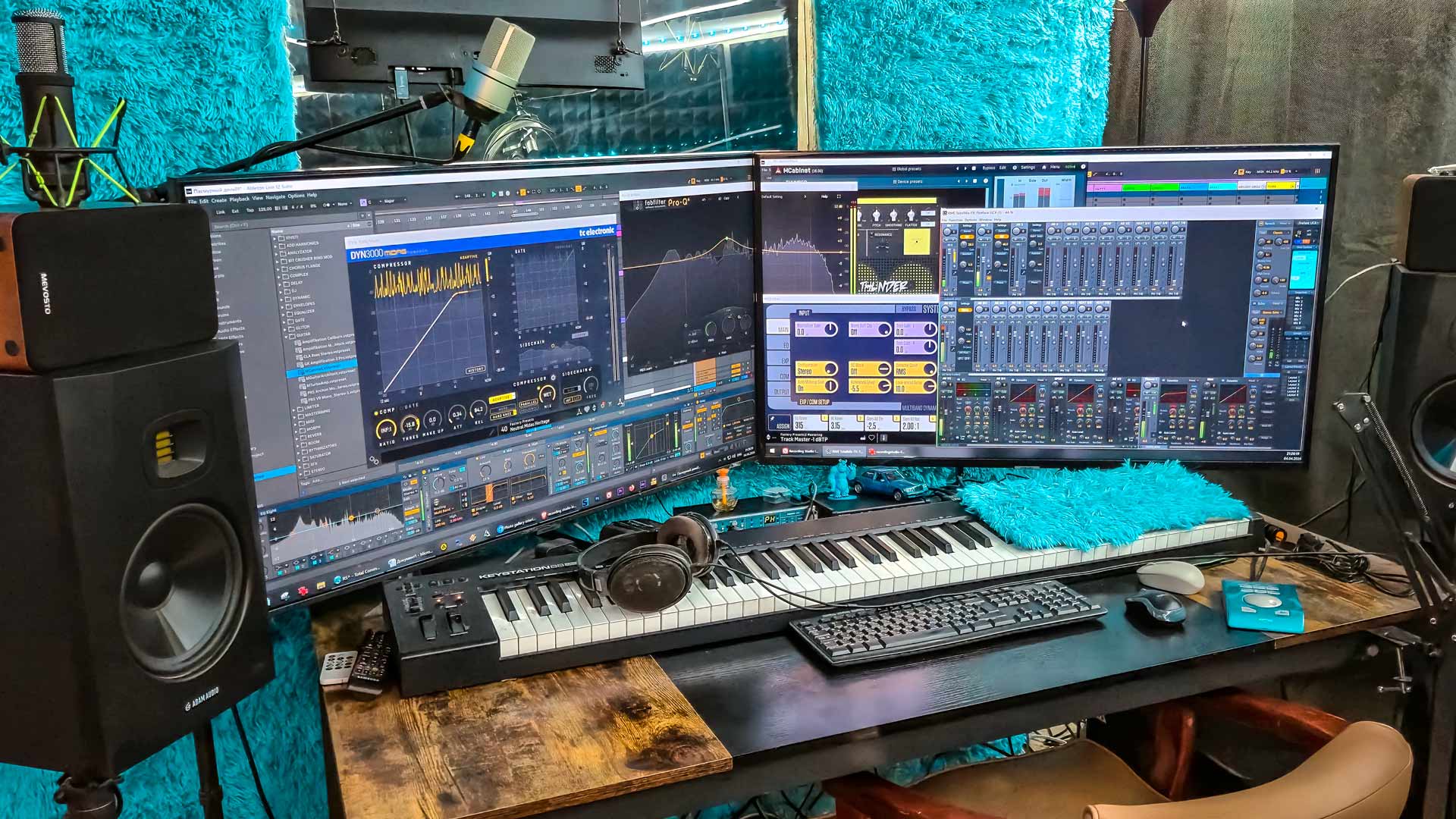
A recording session can fall apart even when everything looks normal from the outside.
The artist comes in. The instrumental is there. The lyrics are there. The studio time is booked. The person is ready emotionally — or at least thinks they are ready. And we begin.
Then, after a while, it becomes clear: something is not happening.
The vocal does not sit. The delivery is uncertain. The notes are not stable. The rhythm is floating. The text is not alive. The artist is tense. The instrumental is fighting the voice. The session loses direction.
This does not mean the artist is hopeless. It does not mean the song is doomed. But it means we need to understand what is breaking the process before we pretend everything is fine.
Instrumental Quality
One of the first reasons a session can fail is the backing track.
Sometimes an artist brings an instrumental of terrible quality. Maybe it was downloaded somewhere from the internet. Maybe it is already heavily compressed, squeezed, distorted, noisy, over-limited, or simply badly made.
And now we are trying to put a voice into it.
But there is no place for the voice. The instrumental is already crushed. It already eats all the space. It already blocks the vocal. It already sounds like a finished wall where no human voice wants to live.
In this case, maybe we can make a demo. Maybe we can create something for reference. But to make a truly good finished track from this kind of instrumental can be impossible.
You cannot always push a good vocal into a bad file and expect a professional record. Sometimes the foundation itself is already broken.
Wrong Key
Another very common problem is the key.
The instrumental may be good. The song idea may be good. The text may be fine. But the key is simply not in the comfortable vocal range of the person who came to sing.
The singer is reaching too high. Or sitting too low. Or constantly fighting the melody. Or trying to survive the chorus. Or singing in a place where the voice loses color, strength, confidence, and control.
Then the session becomes not a creative process, but a struggle with anatomy.
A song must fit the performer. If the key does not fit, the artist spends all energy on survival instead of expression.
Preparation
Very often the problem is simple: the artist is not prepared.
They bring the instrumental, but they do not know where to sing. They do not know where to enter. They have not rehearsed the structure. They do not really understand where the verse starts, where the chorus starts, where the pause is, where the phrase should land.
The text is not learned.
Yes, I can put the lyrics on a monitor in the vocal room. That helps. But if you are reading the text just to pronounce it, then we are no longer talking about acting, image, emotional delivery, character, meaning, or musical confidence.
You are not performing the song. You are trying not to lose the text.
This is a completely different mental state.
The studio is not the best place to meet your own song for the first time.
Melody
Another problem: the melody is not learned.
The artist does not know exactly which notes they are supposed to sing. So the voice begins to wander. It tries one note, then another, then a third. It slides around the scale trying to catch something.
The person may think they are singing emotionally, but in reality the voice is searching for the correct musical party.
Then we do not have performance. We have guessing.
Of course, we can rehearse in the studio. We can find the melody. We can practice. We can improve it. But this takes time. And even if after one or two hours the artist begins to sing better, confidence does not appear instantly.
Now the person is no longer thinking about image, emotion, character, and delivery. They are thinking: please, let me at least not make too many mistakes.
That is not the same thing as a strong recording session.
Vocal Image
Sometimes the technical part is not even the main problem.
Sometimes the artist has not decided what image they are singing in.
Is the voice loud or quiet? Confident or unsure? Lyrical or aggressive? Intimate or public? Gentle or bold? Sad or proud? Calm or nervous? Is the singer telling a story, making a confession, accusing somebody, talking to themselves, talking to one person, or performing for a whole crowd?
If this is not decided, then creative searching begins right in front of the microphone.
I welcome creative searching. Of course I do. Sometimes great discoveries happen in the studio.
But if every take is in a completely different character, the song begins to consist of patches. One line is one person. Another line is another person. One phrase is shy, another suddenly theatrical, another tired, another too loud, another too careful.
The song loses one face.
Whose Song Is It?
Sometimes the artist becomes unsure and constantly asks me what to do.
I will answer. Of course I will answer. It does not bother me. I can give advice. I can suggest delivery. I can suggest structure. I can suggest an emotional direction. I can help invent something. I can help rescue a confused moment.
But if every creative decision comes from me, then gradually it becomes my song.
I do not want that unless we are intentionally producing it together that way.
I want you, as the author, to open up. I want your idea to be realized. I want you to finish the session and say: yes, I made a great song. I can do this.
I can lead you. I can help you. I can give suggestions. But I want to bring you to victory, not take the victory away from you.
Artistic Vision
Another reason sessions fall apart is the absence of artistic vision.
A person writes a song but does not understand who is singing it.
Is it a detached descriptive text with no main character? Such songs exist, but very often they become boring.
Is the main character speaking from the first person? Is the song about himself? Is it about another person in the third person? Is it addressed to someone directly in the second person — “you treated me unfairly,” “you hurt me,” “you love me,” “I admire you”?
This matters.
What is the song about? Who is the hero? What does the hero feel? What situation did the hero get into? In what character does he tell this story? What emotion is behind it? What does he want to communicate? And to whom?
Is this an internal monologue? Is the hero speaking to himself? Is he addressing one person? Or is he standing before an imaginary large audience and saying: look at my life?
These are not empty literary games. They determine how the voice should behave.
Concept
Sometimes the author has not thought through the concept of the song at all.
Then the result becomes loose. Soft. Unclear. Not in a beautiful mysterious way, but in the way where nobody really understands what the song is about.
This should be thought through before the session.
If the artist did not think about it while writing, then the confusion grows when they come to the microphone.
The microphone does not create artistic vision. It reveals whether artistic vision exists.
Technical Mistakes
There are also technical mistakes, of course.
The voice may need training. Diction may need work. Certain sounds may need correction. The rhythm may need to be counted properly. The text may need to be placed more accurately in the beat.
These are technical problems.
And honestly, they are often easier to deal with than artistic confusion.
If a person misses the rhythm, we can work on rhythm. If the diction is unclear, we can repeat the phrase. If a note is false, we can record again or later tune it. If a consonant is swallowed, we can fix that.
Objective problems are not always pleasant, but at least they are visible.
The harder problem is when nobody understands what the song itself wants to be.
Insecurity
Insecurity also breaks sessions.
Sometimes insecurity appears because the artist did not prepare. They do not know the text, do not know the melody, do not know the image, and therefore they naturally feel unstable.
That kind of insecurity is difficult because it is connected to real missing work.
But sometimes the person is simply shy. They have never recorded before. They are afraid that it will not sound good. They are afraid of the microphone. They are embarrassed.
This is much easier to handle.
I am a sociable person. I can talk. I can explain. I can create a comfortable atmosphere. I can help the person relax and understand that they are doing something they like: recording a song.
If the only problem is shyness, do not worry. We will work through it. The result can be good. I will help.
Fatigue
Fatigue matters.
Many people come to the studio after their main workday. They are already tired. They drove somewhere, worked all day, solved problems, talked to people, lived a whole day — and then in the evening they want to record a song.
I understand why. People have schedules. Sometimes the evening is the only available time.
But the body is not a machine.
The voice gets tired. The brain gets tired. Attention gets tired. Emotional energy gets tired.
On top of that, oxygen in the vocal room gradually becomes lower because the person is breathing, singing, working, spending energy. The performer may not even notice how the head starts working worse.
That is why rest matters.
Energy Collapse
Sometimes the artist arrives with emotional excitement.
New place. Studio. Microphone. Anticipation. Nervousness. Hope. The person is full of tension and energy at the beginning.
Then after thirty minutes or an hour, they burn out.
The first takes may have energy. Then the energy falls. The voice becomes dull. The body becomes heavy. The brain starts missing things. The performance becomes worse.
Recording a song is not a short sprint. It is a distance.
You need to distribute your strength. You need to understand that studio work is not only excitement at the start. It is sustained concentration.
Breaks
I usually encourage breaks every fifteen or twenty minutes.
Open the room. Let the air change. Step out of the booth. Sit down. Drink something. Talk for five minutes about something unrelated. Forget the song for a moment.
This is not wasted time.
A change of mental process is one of the best kinds of rest.
After five minutes, the person often hears the song again with a fresher ear. The panic drops. The pressure drops. The head clears a little.
Sometimes this is enough to continue productively.
Stopping in Time
There are moments when I feel that we have hit a wall.
The artist is tired. I am tired. Nobody is thinking clearly anymore. There is no pleasure in recording. The takes are not getting better. The person is suffering instead of creating.
In that situation, the right decision is sometimes very simple:
Enough for today.
Let us continue tomorrow. Let us agree on a time, come back with a fresh head, and start again from this point.
This is often much more productive than torturing the vocalist and pretending that heroism will save the session.
Music does not become better just because people suffer longer.
Professional Habits
Good musicians with experience usually create fewer problems in the session.
They need fewer takes. They record faster. They understand the task. They know the song. They know where they are entering. They know what emotional direction they need. They know when a take is good and when it is not.
The creative path is not a strange winding forest. It is much more direct.
This does not mean professionals never struggle. Of course they do. Everyone has difficult days.
But preparation and experience remove a huge amount of unnecessary chaos.
Rehearsal
Sometimes a session becomes average simply because the artist came to rehearse, not to record.
They begin serious preparation only in front of the microphone.
Yes, after one or two hours in the studio they may sing better than at the beginning. Of course. Rehearsal works.
But this is still not the same as rehearsing for a week or two before the session.
If the song needed two weeks of preparation, one hour in the studio will not magically replace it.
And there is another problem: while rehearsing in the studio, the artist is also getting tired.
So yes, the person becomes a little better prepared, but at the same time loses energy. By the time they understand the song better, they may no longer have enough strength to give the maximum performance.
The best version is simple: rehearse before, then come to the studio and polish the performance in front of the microphone.
The Enemy
I want to say this separately.
Fuss kills creativity.
Not speed. Not energy. Not passion. Fuss.
When a person grabs everything at once. Wants to do everything immediately. Wants to hurry, hurry, hurry. Has not prepared, but now wants to fix everything instantly. Click here, sing there, change this, try that, no wait, again, faster, faster.
This is not creativity.
This is panic disguised as activity.
Improvisation and spontaneous creation are the privilege of a prepared person.
Yes, such a person can improvise. Yes, they can create in real time. Yes, they can make something live and unexpected. But they are in the subject. They are prepared. They have material inside them.
When there is no preparation, no clear idea, no confidence, and everything has to happen urgently and all at once — that is fuss.
And fuss is the enemy of creativity.
Please remember this.
Studio Help
All of this does not mean I only work with perfectly prepared professionals.
No.
If you come not fully prepared, I will still help. I will give advice. I will point out mistakes. I will help you understand what is wrong. I will help you rehearse where needed. I will help you find the right direction.
If you are tired, we will rest.
I can pour you tea. We can sit and talk. We can breathe. We can return to the song without panic.
The studio should not be a torture chamber where the artist is beaten by their own mistakes.
It should be a place where the artist can work, learn, improve, and still feel human.
Understanding the Artist
I am not only an engineer sitting with cold technical ears.
I am also a singer, an artist, and a songwriter.
I understand what it means to record yourself and suddenly realize: no, today this is not going to work. This is bad. Let us leave it for tomorrow. Tomorrow I will have more strength.
I know this feeling from the inside.
That is why I do not treat artists like machines. I know that creativity needs comfort, attention, honesty, rest, and sometimes the courage to stop in time.
The Goal
If a session starts falling apart, the goal is not to shame the artist.
The goal is to understand why.
Is the instrumental bad? Is the key wrong? Is the song not rehearsed? Is the text not learned? Is the melody unclear? Is the artistic image missing? Is the artist simply shy? Is the artist tired? Did we hit a wall? Is there too much fuss?
When we understand the reason, we can choose what to do.
Record again. Rehearse. Change the key. Take a break. Rewrite a phrase. Clarify the character. Continue tomorrow. Or sometimes accept that the song needs more preparation before it can be recorded properly.
This is honest studio work.
Come Prepared, But Do Not Be Afraid
The best thing you can do before coming to the studio is prepare.
Learn the text. Learn the melody. Understand the structure. Think about the artistic image. Understand who is singing, to whom, and why. Rehearse. Rest. Do not come in a state of panic and fuss.
But even if something is not perfect, come anyway.
We will listen. We will record. We will understand what works and what does not. I will help you with advice, technical control, musical hearing, atmosphere, and experience.
In a comfortable and friendly studio environment, together with a colleague who understands both engineering and artistry, we will move your song toward the best possible result.
Come. We will record, listen, think, correct, and create a song you will be proud of — and I will be happy for you too.
Studio Knowledge Base
If you would like to learn more about how professional recording sessions work, explore the rest of our Inside a Recording Studio Session series:
Inside a Recording Studio Session
How Vocal Recording Actually Works
How Vocal Post Production Actually Works
How We Work With a Client Instrumental
Who Owns the Rights to a Music Arrangement?
How We Create a Music Arrangement Together
How We Record Rap and Hip-Hop Songs
How Dance Music Vocals Are Recorded
How Voice-Over Recording Works
What Audio Engineers Do During Recording