Inside a Recording Studio Session
Many artists think the audio engineer is just the person who presses Record. The singer sings, the rapper reads, the musician plays, and the engineer sits behind the glass clicking buttons.
At Ronter Sound Recording Studio Philadelphia, I often see that people have no idea how much work happens on the other side of the glass during a recording session.
In reality, the audio engineer carries a huge part of the session on his shoulders. Before you even enter the studio, the room, the equipment, the routing, the monitoring, the recording system, the workflow, the acoustics, and the whole technical environment already have to be prepared.
And when you finally stand in front of the microphone, my job is not only to record your voice. My job is to give you freedom to create while I control the technical, musical, and production side of the session.
Before the Session
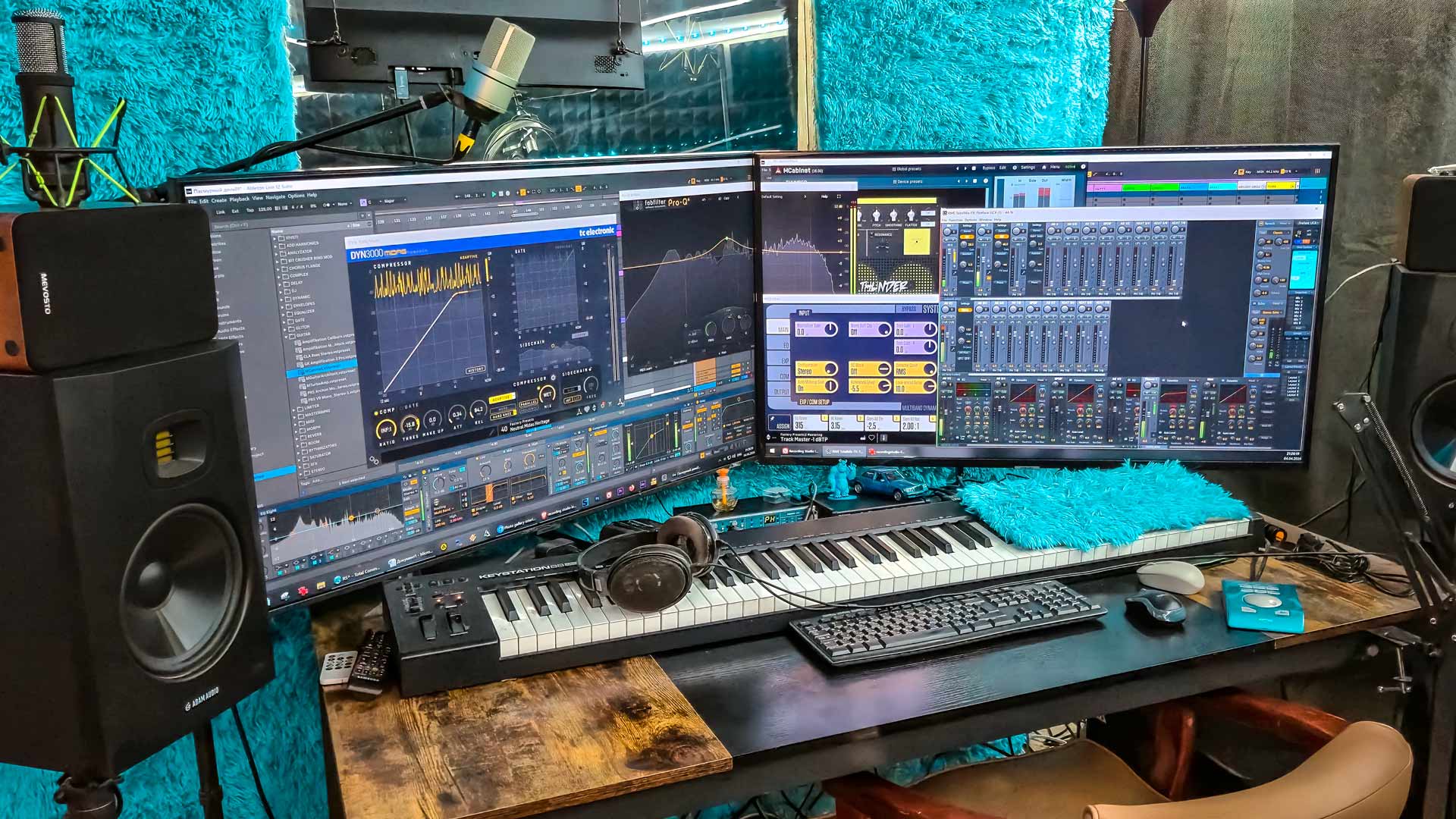
First of all, I built this studio.
I collected the equipment setup. I connected it. I configured it. I learned how to work with all of it. I created a control room and a vocal booth where recording can happen without unnecessary noise, without chaos, and with a high-quality recorded signal.
I built a system where I can work with sound seriously. Where I can record, monitor, edit, tune, align, mix, master, and control the whole process from the first take to the finished track.
I spent many years learning music. Learning sound engineering. Learning how to hear. Learning how to work with musicians. Learning what a good take sounds like. Learning what a bad technical problem sounds like before the artist even understands something went wrong.
This is a huge amount of work that happened before you, dear musician, came to my studio.
The Project
When you come to the studio, I do not immediately throw you into the vocal booth and tell you to start singing.
First I try to understand your project.
I listen to the arrangement. I try to understand your idea. I try to understand what you want to achieve, what kind of song this is, what the emotional center is, what style we are working in, and how to make the result good without destroying your author’s intention.
My goal is not to replace your idea with mine.
My goal is to carry your idea carefully through the whole process and help it become a finished recording.
Good studio work is not only technical. It is also respectful. The artist comes with a thought, a song, a fragile creative thing. My job is to help that thing survive the studio process and become stronger.
Preparation
Before recording starts, I prepare the project.
I check the equipment. I check the monitoring. I check routing. I prepare the recording session. I make sure the instrumental is ready. I make sure the microphone chain works. I make sure the artist can hear properly.
Then you enter the booth.
We set the headphone balance. Not too loud, not too quiet. Comfortable. Normal. So you hear the music, hear yourself, and do not fight the headphones instead of performing.
This may look like a small technical detail, but it is not small at all.
If the singer or rapper feels uncomfortable in the headphones, the performance changes. The body tightens. The voice changes. The rhythm changes. The confidence disappears. So comfort is part of the recording quality.
Guidance
During the session, I guide you carefully.
I encourage you. I point out mistakes. I praise successful moments. I tell you when something worked well: yes, that was good, that is the direction, do it like that.
This matters because recording is not only a technical event. It is psychological.
The artist is standing alone in the vocal booth. The microphone is in front of them. The headphones are on. The red recording button is somewhere in the air. And suddenly the person may feel pressure.
My job is to make that pressure useful, not destructive.
I want the artist to feel that someone competent is behind the glass, controlling the process, listening carefully, and helping the performance become better.
Creative Freedom
When you sing or rap, I give you the possibility not to think about technical details.
You do not have to think about recording levels. You do not have to think about clipping. You do not have to think about routing. You do not have to think about where to place the cursor, which track is armed, where the take starts, where the punch-in happens, or whether the signal is technically safe.
I take that responsibility away from you.
You should think about the song. The image. The emotion. The meaning. The delivery. The performance.
This is very important. I know it not only because I record other people. I know it because when I record my own songs, I often have to record myself. And working with yourself in the studio is horribly inconvenient.
Even simple things become annoying: moving takes, pressing Record, setting the right place for recording, preparing the next section, managing the session while trying to stay inside the emotion of the song.
It steals 95% of the working attention.
So even if the engineer only pressed Record properly, even that already removes a huge burden from the vocalist. But a real engineer does much more than that.
Behind the Glass
While you are performing, you are inside the song.
I am behind the glass listening to everything.
I control the recording level. I listen for noise. I watch for clipping. I hear whether the take is technically clean. I hear whether the performance is alive. I hear where the good takes are. I hear where the bad takes are.
I listen to timing. I listen to notes. I listen to diction. I listen to whether the words are clear. I listen to whether the emotion is real. I listen to whether the take can be used later or whether it is better to record again immediately.
The artist often thinks only about the current phrase.
I am already thinking about the whole future production.
Can this take be tuned if needed? Can this timing be fixed? Is this note worth saving? Is this line emotionally so good that it is better to keep it and correct a small technical problem later? Or is the take so weak that no editing will make it worth using?
These decisions happen constantly.
Takes
During recording, I am already sorting the takes in my head.
I remember where the good take was. I mark for myself where something can be used. I notice which phrase had the best emotion. I hear which note can be corrected and which note is better to record again.
Sometimes a take has one wrong note, but the feeling is so good that I would rather keep the take and fix the note later than force the artist to repeat it and lose the life.
Sometimes the opposite happens. The note may be technically closer, but the performance is dead. Then we need another take.
This is why an engineer must not listen like a machine.
A machine hears correctness. A professional hears usefulness.
A take is not only pitch and timing. A take is emotion, intention, body, voice, character, future editing possibilities, and how it will live inside the final track.
Technical Control
A recording session can be ruined by many small technical problems.
Too much level. Too little level. Clipping. Noise. Wrong headphone balance. Bad punch-in. Wrong recording place. A take recorded on the wrong track. A phrase lost because nobody pressed Record at the right moment.
These things sound boring, but if nobody controls them, they destroy the session.
The artist should not have to carry this burden while performing.
If you are trying to sing with emotion, why should you also worry about whether the signal is clipping? If you are trying to rap with the correct character, why should you also think about where the cursor is in the project?
This is what the engineer is for.
I stand between the artist and the technical chaos.
After Recording
When the recording stage is finished, the work does not end.
In many ways, even more technical work begins.
I start correcting timing by hand so the vocal works with the rhythm and, when there are multiple voices, so the voices work together. I make vocal tuning so the notes are clean. I shape the sound. I give it depth, density, clarity, and presence.
I separate frequency conflicts. I define space. I work with dynamics. I decide where processing is appropriate. I prepare the vocal so it belongs inside the track instead of sitting on top like a pasted object.
Then comes mixing. Then mastering.
Many people already understand that an engineer is needed for mixing and mastering. They know there are knobs, plugins, EQ, compression, frequency decisions, loudness, balance, and final sound.
But what many artists do not realize is that the engineer is already doing important work from the first moment of recording.
Comfort
Creating a track is actually a complicated process.
There are technical details. Musical details. Emotional details. Recording decisions. Take selection. Editing possibilities. Future mixing problems. Monitoring problems. Timing problems. Pitch problems. Diction problems. Arrangement problems.
The artist should not have to hold all of this at once.
If a professional with huge experience is guiding the process, then the artist feels something completely different.
Instead of a stressful technical nightmare, the session becomes a lighter and more interesting creative journey.
I take the artist by the hand and lead them through the work. I make the process comfortable, interesting, relaxed, and free enough for creativity.
I want the artist to feel that they can create. That they can focus on emotion. That they can perform. That they can try. That the technical side is under control.
And believe me, 95% of this comfort is the engineer’s work.
Author’s Idea
I want the author to succeed.
I want the idea to be realized. I want the song to sound as close as possible to what the artist imagined — and if possible, even better.
That is why I guide, suggest, correct, encourage, listen, choose, edit, tune, mix, and master. Not to show that I am more important than the artist. Not to take the song away.
The artist brings the creative spark.
I help protect it from bad sound, bad timing, bad technical decisions, weak takes, unnecessary stress, and the chaos that can happen when a person tries to create and engineer at the same time.
The best recording session is the one where the artist feels free, and the engineer quietly carries the invisible weight.
Ronter Sound
At my studio, I am not only the person who starts the recording.
I built the environment. I prepared the system. I listen to the project. I understand the author’s idea. I prepare the session. I make the headphones comfortable. I control the levels. I prevent technical problems. I guide the performance. I sort the takes. I remember what can be used. I help decide when to record again and when to keep a good take.
Then I edit. I tune. I align timing. I shape the sound. I mix. I master. I help the song move from raw material to a professional finished track.
This is what happens on the other side of the glass.
And this is why working in a real studio with an experienced engineer matters.
You come to create. I take care of the difficult part around your creativity so your idea has the best chance to become real.
Studio Knowledge Base
If you would like to learn more about how professional recording sessions work, explore the rest of our Inside a Recording Studio Session series:
Inside a Recording Studio Session
How Vocal Recording Actually Works
How Vocal Post Production Actually Works
How We Work With a Client Instrumental
Who Owns the Rights to a Music Arrangement?
How We Create a Music Arrangement Together
How We Record Rap and Hip-Hop Songs
How Dance Music Vocals Are Recorded
How Voice-Over Recording Works
What Audio Engineers Do During Recording