Inside a Recording Studio Session
Dance music is not built around showing everyone how smart the lyrics are. Dance music is built around groove, rhythm, movement, energy, pulse, repetition, hooks, and the simple physical fact that the track should make people move.
At Ronter Sound Recording Studio Philadelphia, when we work on a dance track, EDM track, electronic dance song, club vocal, dance-pop record, or vocal part for electronic music, the first question is not “how many words are in the song?” The first question is: does this track move?
If there is no groove, no pulse, no energy, no dance feeling inside the instrumental, then the vocal alone will not save it. In dance music, the backing track is often the main engine. The voice may be a hook, a phrase, a shout, a spoken piece, a short vocal sample, a repetitive line, or a full vocal part — but it must serve the movement of the track.
Groove First
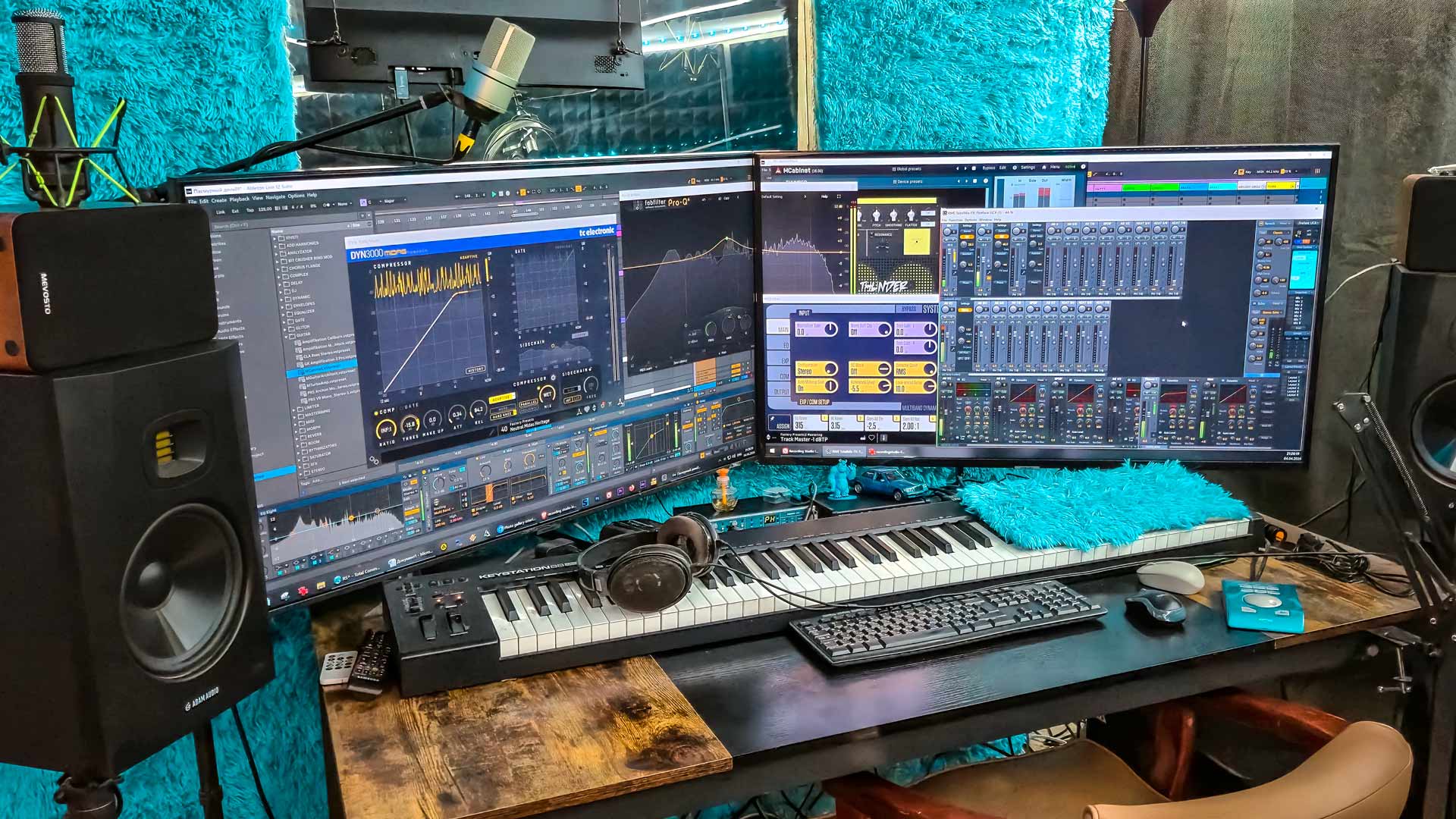
The most important thing in a dance track is groove.
Rhythm. Pulse. Bounce. The feeling that makes the body move before the brain has time to explain anything. That little internal command: get up, move, dance, nod your head, tap your foot, feel the beat.
This is the difference between dance music and many other styles. In some genres, the lyric can carry the whole song. In some genres, the guitar riff is the king. In some genres, the singer’s emotional story is the center.
But in dance music, the track itself must already contain the energy of movement. The instrumental should not lie there waiting for the vocal to resurrect it. It must already have rhythm, drive, and a dancing bloodstream.
The vocal can make it better. The vocal can make it memorable. The vocal can give it a face. But the groove must already be alive.
The Instrumental
In a dance track, the instrumental is not just background for the singer.
Very often the instrumental is the main thing. The drums, bass, synths, groove, drops, builds, breaks, transitions, rhythmic pressure, sidechain movement, low-end energy, and overall pulse are what make the track work as dance music.
The vocal can be very small. Sometimes it is one word. Sometimes one phrase. Sometimes a hook repeated again and again. Sometimes a shout. Sometimes a small spoken line. Sometimes a sample. Sometimes a short melodic phrase that becomes the face of the whole track.
And this is normal.
In dance music, the meaning of the text is not always the main value. Sometimes nobody cares what language the vocal is in. Sometimes nobody cares whether the phrase is deep. If there is a good idea, good meaning, good lyric — excellent, pleasant bonus. But if the track does not move, beautiful words will not make it a dance record.
A dance track first has to dance.
My Background
I should say this directly: electronic dance music is one of my favorite musical worlds.
My own musical taste was formed in a rave environment. Dance events, nightclubs, rave festivals in Europe — this was not some distant exotic world for me. This was a real musical atmosphere where I grew as a listener, musician, and later as a sound engineer.
I make dance and EDM-style tracks myself. I have performed at rave festivals. I still create music in this style, including tracks for my daughters. So when an artist comes to my studio with dance music, EDM, club music, electronic pop, dance vocals, or a track that should work on a dance floor, we are not speaking completely different languages.
Some studios are full of rock people. Some are full of blues people. Some engineers understand guitars beautifully, but dance music for them is just “some electronic beat.”
For me, this music is close. I understand the pulse. I understand why the groove matters. I understand why the drop has to work. I understand why rhythm precision is not a small detail. I understand why the track must carry energy even before the vocal begins.
So if you are an artist working in dance music, EDM, electronic music, club vocals, dance-pop, or any related direction, my studio can be a very natural place for you. We will be much closer to being on the same wave.
The Session Starts
When an artist brings me a dance track and wants to record vocals on it, first I listen to the material.
What is the tempo? What is the groove? Does the beat move? Does the bass work with the drums? Is the track already energetic? Is it club-oriented? Is it more radio dance-pop? Is it more EDM? More house-like? More electronic? More festival? More intimate? More hypnotic?
I do not need to lock it into one narrow subgenre. We can work with different kinds of dance music. The exact label is less important than the musical function.
The question is: what should this track do to the listener?
Should it make people jump? Should it make them dance smoothly? Should it create a club atmosphere? Should it feel like an open-air festival? Should it be more pop and catchy? Should it be darker and more underground? Should it be simple and direct? Should it be emotional but still danceable?
Before recording the vocal, we need to understand the energy of the track.
Track Quality
If the artist brings a finished instrumental, it should already be made well enough.
It should have energy. It should have rhythm. It should have a groove. It should not sound like a tired loop that accidentally wandered into a club.
Of course, we can work with many levels of material. We can improve things. We can adjust. We can mix. We can master. We can help the vocal sit inside the track. But the core dance energy has to exist somewhere.
A vocal hook can strengthen the track. A good phrase can make it memorable. A strong singer can add emotion. But if the instrumental itself does not move, then we are trying to build a dance house on sand.
This is why I like when we can also work on the instrumental, mixing, and mastering in my studio. Dance and EDM production is not only about recording the voice. It is about the whole track breathing as one energetic mechanism.
Making the Track
There are different ways to work.
Sometimes the artist brings a finished dance instrumental, and our job is to record the vocal, process it, fit it into the track, and bring everything to a professional sound.
Sometimes the artist brings a rough idea, reference, melody, phrase, or vocal concept, and we build the dance track together in the studio.
Sometimes there is already a strong beat, but the arrangement needs work. Sometimes the chorus needs more lift. Sometimes the drop needs more energy. Sometimes the vocal hook suggests where the track should go. Sometimes one little phrase becomes the center of the whole production.
Dance music allows this. A small idea can become a whole track if the groove is right.
So we can work with what you have: a finished instrumental, a rough demo, a vocal hook, a beat, a reference, or just an idea of the energy you want.
Vocal Role
In a dance track, the vocal can play many roles.
It can be a full sung vocal part. It can be a chorus hook. It can be one repeated phrase. It can be a spoken line. It can be a rhythmic chant. It can be a shout before the drop. It can be a small melodic motif. It can be a sample-like element that gives the track a human face.
This is why recording vocals for dance music is not the same as recording a traditional pop ballad.
Sometimes the vocal is not there to tell a complicated story. Sometimes it is there to ignite the track. To mark the hook. To give the listener something to remember. To create anticipation. To make the drop feel stronger. To make the club moment more human.
A short phrase can be more useful than a long text if that phrase has the right rhythm, the right tone, and the right place in the track.
Recording the Vocal
When we record the vocal for dance music, the main question is not only whether the notes are correct.
The question is whether the vocal carries the right energy.
A dance vocal often needs attack. Confidence. Rhythm. Brightness. Movement. It has to sit inside the beat. It has to push the track forward or lock into the groove. It cannot sound like the singer is standing outside the club, politely asking to be let in.
If it is a sung vocal, we record it with the right emotional and rhythmic direction. If it is a short hook, we search for the version that sticks. If it is a spoken phrase, we make sure the attitude is right. If it is a shout, it must have real energy, not a tired imitation of excitement.
Dance music is very honest in this sense. Fake energy sounds fake immediately.
Timing Precision
Dance music is built on pulse.
That means timing matters very seriously.
In some styles, a vocal can float more freely. It can delay a little, breathe around the beat, stretch emotional phrases, and still feel natural.
In dance music, freedom is possible too, but it must be controlled. Because the beat is not just accompaniment. The beat is the ground under everybody’s feet.
If the vocal enters lazily, if consonants fall in random places, if repeated hooks are not tight, if doubles and backing phrases are not synchronized, then the track loses power. It stops feeling like a precise dance mechanism and starts feeling unfinished.
So we pay attention to timing. We record carefully. We choose the right takes. We edit where needed. We make sure the vocal works with the groove, not against it.
Hooks
Repetition is not a weakness in dance music.
Repetition is often the weapon.
A phrase repeats. A hook repeats. A vocal chop repeats. A line appears before the drop again and again. And the listener begins to wait for it.
But because the hook repeats, it has to be strong. If one phrase will return many times, that phrase must have the right shape. The right rhythm. The right tone. The right emotion. The right place in the arrangement.
A bad repeated phrase becomes annoying. A good repeated phrase becomes identity.
So when we record a dance music vocal hook, we do not treat it as “just one line.” One line may become the whole face of the track.
Clarity
Electronic dance arrangements can be dense.
Drums. Bass. Synths. Leads. Pads. Risers. Impacts. Effects. Arpeggios. Noise. Sidechain movement. Low-end pressure. High-frequency excitement.
Inside all of this, the vocal has to remain readable.
This does not always mean the vocal must be huge and loud. Sometimes it should be in front. Sometimes it should be part of the texture. Sometimes it should appear only as a hook. But whatever its role is, the listener should understand why it is there.
If the vocal is important, it needs space. Frequency space, dynamic space, rhythmic space, emotional space.
This is why dance vocal recording, editing, mixing, and production all have to work together. The vocal should not fight the instrumental. The instrumental should not swallow the vocal. The track should behave like one club-ready organism.
Processing
After recording, we treat the vocal as part of the track.
We choose the best takes. We tune where notes need correction. We align timing where rhythm must be tighter. We control dynamics. We shape the tone. We add effects where the style asks for them.
The vocal may need to be bright. It may need to be wide. It may need delays, reverbs, throws, rhythmic effects, stutters, chops, or something very simple and direct.
But I do not add effects just because effects exist. That is childish. We add what helps the vocal serve the track.
In electronic dance music, the vocal often becomes part of the production itself. Not just a singer standing on top of the instrumental, but one more rhythmic, melodic, emotional element inside the dance mechanism.
Mixing and Mastering
For dance music, mixing and mastering are extremely important.
Because this style depends on energy. The low end has to work. The drums have to hit. The groove has to breathe. The vocal has to sit inside the track. The drop has to feel like a drop. The track has to move as a whole.
If the instrumental was mixed somewhere else and already sounds good, fine. We can record vocals over it and work with what we have.
But if we can also mix and master the track in my studio, that is often better. Because then we can shape the instrumental and vocal together, not fight with a finished file that refuses to make room.
We can make sure the voice belongs inside the track. We can make sure the energy stays danceable. We can make sure the song does not lose the club feeling while becoming more polished.
Artist Vision
As always, the author’s idea matters.
If the artist has a specific vision, we work with that vision. My job is not to take the track away from the artist. My job is to help the track become what the artist is trying to create.
But dance music also has its own law: it must carry dance energy.
So while we respect the author, we also respect the genre. If this is supposed to be a dance track, then it should feel like one. The groove should work. The rhythm should be clear. The vocal should not ruin the pulse. The production should not become sleepy. The track should not forget why it exists.
We balance both things: the artist’s creative idea and the practical energy of dance music.
Studio Work
If you are making dance music, EDM, club vocals, electronic music, dance-pop, or a track that should work on the dance floor, it helps to work with someone who actually loves this world.
I am not looking at dance music from the outside like some strange machine noise.
I grew around this music. I listened to it in clubs. I felt it at rave festivals. I performed in that environment. I still create it. I know what it means when the track has no movement. I know what it means when the groove is dead. I know what it means when the vocal is technically there but has no energy.
This matters.
Because studio work is not only technical. It is also taste. Understanding. Shared language. The feeling that we are trying to make the same kind of thing.
If you want to make a dance track, it is good when the engineer does not secretly wish you were recording blues instead.
Record Your Dance Track
If you have a dance track, EDM track, electronic song, club instrumental, vocal hook, or rough idea, bring it to the studio.
We can record the vocal. We can work with hooks, phrases, sung parts, spoken lines, ad-libs, vocal samples, and short catchy ideas. We can help the vocal sit inside the beat. We can help the track keep its groove. We can mix and master the song so it stays energetic and danceable.
Whether you already have a finished instrumental or want to create the dance track together, we can work. The goal is simple: the track should move, the vocal should belong, the energy should stay alive, and the final song should feel like real dance music — not just a beat with a voice thrown on top.
Come to the studio. We will work on your track carefully, rhythmically, musically, and with real love for electronic dance music.
And yes — we will try to make you a star of discos, clubs, open-air stages, and whatever dance floor your music can reach.
Studio Knowledge Base
If you would like to learn more about how professional recording sessions work, explore the rest of our Inside a Recording Studio Session series:
Inside a Recording Studio Session
How Vocal Recording Actually Works
How Vocal Post Production Actually Works
How We Work With a Client Instrumental
Who Owns the Rights to a Music Arrangement?
How We Create a Music Arrangement Together
How We Record Rap and Hip-Hop Songs
How Dance Music Vocals Are Recorded
How Voice-Over Recording Works
What Audio Engineers Do During Recording